WhatsApp: +8613315867171 Email: starlee@feiyaguoji.com

- All
- Product Name
- Product Keyword
- Product Model
- Product Summary
- Product Description
- Multi Field Search

Views: 0 Author: Site Editor Publish Time: 2026-06-05 Origin: Site


Wastewater facilities face immense operational pressure today. You must constantly reduce total suspended solids (TSS) and biological oxygen demand (BOD). You also have to manage highly unpredictable flow rates safely. Operators face constant challenges keeping systems online during heavy influxes.
Traditional static screens often fail to keep up. They suffer from frequent blinding under heavy organic loads. Operators spend excessive hours performing manual scraping and routine maintenance. This manual intervention wastes valuable labor and introduces operational inconsistencies.
Enter the automated alternative. A high-quality Rotary Drum Screen delivers continuous, reliable cleaning. It stabilizes primary filtration and significantly reduces downstream processing loads. We will explore how these machines operate, compare them to older methods, and guide your procurement process. You will learn exactly how to size, select, and integrate this technology into your plant.
Operational Efficiency: Rotary drum screens automate solid-liquid separation, drastically reducing operator intervention and equipment blinding.
Downstream Protection: High-capture rates protect sensitive secondary treatment equipment (pumps, membranes) from abrasive damage and clogging.
Technology Edge: V-shaped wedge wire construction minimizes headloss and prevents particle wedging compared to perforated plates.
Sourcing Focus: Partnering directly with a verified wedge wire screen manufacturer ensures custom slot sizing and reliable wholesale procurement.
Poor primary screening creates a destructive ripple effect across an entire wastewater treatment plant. Inefficient separation at the headworks guarantees severe mechanical and biological problems downstream. You cannot ignore the cascading financial impact.
Consider the daily wear on your influent pumps. When grit, rags, and coarse debris bypass static screens, they aggressively erode pump impellers. This abrasive damage slashes the lifespan of expensive rotating equipment. Furthermore, uncaptured organic solids eventually settle in aeration basins. This sludge buildup consumes valuable volumetric capacity. Your blowers then work much harder to maintain dissolved oxygen levels. Energy consumption spikes dramatically as a result.
You need clear success criteria to evaluate any filtration upgrade. A successful modernization project must deliver specific, measurable improvements. Plant managers should expect:
Consistent flow capacity: The screen must handle peak storm flows without overflowing the channel.
Minimal headloss: The equipment should maintain optimal hydraulic profiles across the screening surface.
Compliant TSS removal rates: The unit must capture the necessary volume of solids to meet local discharge or secondary treatment requirements.
Reduced maintenance hours: Automated cleaning should eliminate the need for daily manual scraping.
We see these success criteria applied across various demanding environments. Municipal headworks rely on robust pre-treatment to protect civic infrastructure. Industrial food and beverage plants utilize fine screens to process heavy organic loads. Pulp and paper mills require specialized separation for fibrous wastewater. Specialized applications even include hydropower intakes, where debris removal protects delicate turbines from catastrophic impact.
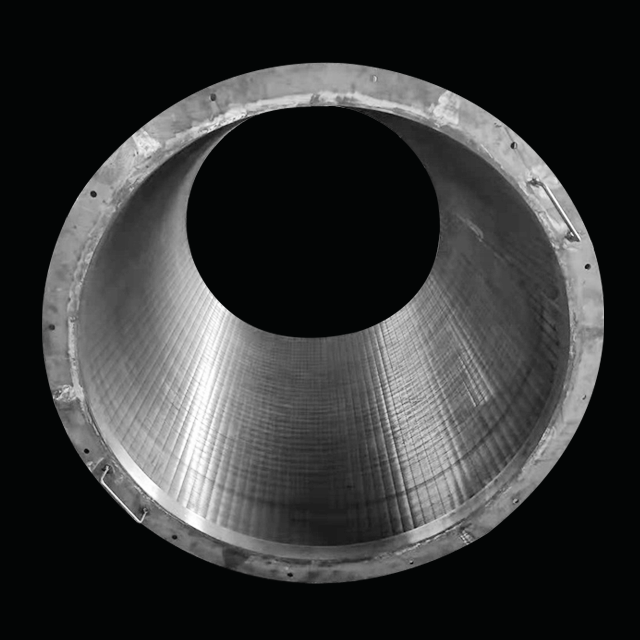
Understanding the internal mechanics helps engineers maximize equipment lifespan. The continuous self-cleaning cycle defines the core value of this machinery. The process follows a precise sequence to ensure uninterrupted solid-liquid separation.
Influent Flow: Wastewater enters the internal or external surface of the drum cylinder, depending on the specific feed design.
Solid Capture: Liquid passes through the precision slots. Debris larger than the slot size remains trapped on the screen surface.
Drum Rotation: A robust drive motor slowly rotates the cylinder. This rotation lifts the captured solids out of the liquid flow.
Automated Cleaning: A stationary scraper blade shears the debris off the rotating surface. An integrated spray bar simultaneously blasts remaining particulate matter away.
The "V-wire" profile provides a massive technological advantage over woven mesh or perforated plates. Woven wire creates square openings. These square openings easily trap irregular particles. Perforated plates feature straight-walled holes. Debris wedges tightly inside straight walls, causing permanent blinding.
Wedge wire features a continuous slot design. The V-shaped profile expands inward. If a near-size particle passes the surface lip, the widening gap allows it to fall freely through the screen. It will not stick. This unique geometry drastically reduces the risk of particle wedging.
Material integrity remains critical in aggressive environments. Wastewater contains hydrogen sulfide, industrial chemicals, and varying pH levels. You must specify appropriate metallurgy. 304 stainless steel serves well for standard municipal applications. However, 316L stainless steel provides essential corrosion resistance for industrial flows or coastal facilities. Settling for inferior metals guarantees premature structural failure.
Plant designers frequently weigh automated rotary options against traditional static equipment. Each technology has a distinct place, but their long-term performance differs significantly.
Static bow screens present a very low initial capital expenditure. They require no electricity and have no moving parts. However, they are highly susceptible to blinding under variable organic loads. A sudden influx of grease or fibrous material quickly seals the screening surface. Operators must physically scrape the screen multiple times per day. The higher upfront investment of a rotary alternative easily justifies itself. Automated continuous operation guarantees consistent throughput. You eliminate the labor costs tied to manual scraping.
Step screens offer another common comparison point. Step screens perform adequately for coarse debris. However, they struggle to achieve high capture efficiencies for fine solids. Their mechanical linkages also require frequent adjustment. Rotary drums typically offer tighter slot sizing. You can specify gaps down to 0.25mm or up to 3mm. This precise sizing delivers superior fine solid removal, protecting delicate membrane bioreactors (MBRs) downstream.
Feature | Static Bow Screen | Step Screen | Rotary Drum Screen |
|---|---|---|---|
Automated Cleaning | No | Yes | Yes (Scraper & Spray) |
Blinding Resistance | Low | Moderate | High (V-wire design) |
Fine Solid Capture | Poor | Moderate | Excellent (Tighter slots) |
Operator Intervention | High | Moderate | Low |
Engineers must critically evaluate several mechanical aspects before finalizing a specification. Proper sizing dictates the entire success of the installation.
You must establish a strict correlation between flow rate and slot sizing. Drum diameter, length, and slot size all interact to determine total capacity. A tight 0.5mm slot provides excellent capture but reduces hydraulic throughput. You must calculate the peak hourly flow rate carefully. Sizing the drum too small causes channel overflow during storm events. A competent manufacturer will provide hydraulic calculations proving their recommended dimensions handle your peak flows safely.
Drive mechanism reliability serves as another major evaluation point. Direct drive systems connect the motor directly to the drum shaft. They feature fewer moving parts and require less maintenance. Chain drive systems cost less initially but require regular lubrication. Chains stretch over time. They introduce additional failure points in wet, corrosive environments. We strongly recommend evaluating direct drive systems for heavy-duty applications.
Assess the accessibility of the spray bar and scraper design. A common operator pain point involves spray nozzle clogging. If the internal wash system is buried under heavy cowlings, operators will ignore it. Ensure the equipment design allows easy removal of spray headers. The scraper blade must also be easily adjustable to maintain perfect contact tension against the drum.
System integration elevates a simple machine into a smart asset. Modern plants rely on automation. Check the capability to integrate the control panel with existing SCADA systems. You can program automated wash cycles based on differential head pressure. When upstream sensors detect a rising water level, SCADA triggers a high-pressure wash cycle. This smart integration prevents blinding before it threatens plant operations.
Transitioning from paper designs to physical installation uncovers hidden challenges. Spatial constraints dictate many project outcomes. Upgrading existing channels requires careful civil works planning. Older facilities often lack the necessary width for large cylindrical drums. Packaged plants face even stricter footprint limitations. You may need to specify flanged, internally-fed designs that drop directly into existing pipework.
We must also address a crucial reality check regarding blinding. While highly efficient, these screens can still struggle with excessive fats, oils, and grease (FOG). Cold water spray bars merely push FOG around the cylinder. The grease eventually smears across the wedge wire, sealing the slots. If your influent contains heavy FOG, you must integrate a high-pressure hot water or steam wash system. Heat melts the grease, allowing the spray bar to blast it through the screen.
Establishing a routine maintenance schedule guarantees long-term reliability. Unplanned downtime destroys operational efficiency. Implement a transparent breakdown of expected maintenance tasks. Treat the screen as a critical asset.
Frequency | Maintenance Task | Focus Area |
|---|---|---|
Daily | Visual inspection of rotation and discharge | Check for unusual noise or vibration. |
Weekly | Clear spray nozzles and check pressure | Ensure consistent water fan across the drum. |
Monthly | Inspect scraper blade wear and tension | Adjust blade to maintain flush contact. |
Quarterly | Grease main bearings and inspect drive | Lubricate per manufacturer specifications. |
Procurement teams face a critical choice between manufacturers and third-party distributors. Sourcing directly from a specialized wedge wire screen manufacturer yields vastly better results. Distributors often sell standard, off-the-shelf sizes. Manufacturers offer deep customization. You get precise slot precision tailored to your specific particulate matter. They can fabricate custom flanges to match your exact piping.
Vetting a whosale Rotary Drum Screen partner requires strict due diligence. Do not rely solely on marketing brochures. Demand concrete engineering proof. Ask for detailed hydraulic calculation sheets. These documents prove their screen sizing matches your peak flow data under worst-case scenarios.
Compliance documentation is non-negotiable. Ensure the vendor holds current ISO certifications. Request Material Test Reports (MTRs) for all stainless steel components. MTRs guarantee the 316L stainless steel you ordered actually contains the correct alloys for corrosion resistance.
Evaluate their after-sales support infrastructure. Equipment eventually requires spare parts. Confirm the availability of replacement drum cylinders. Check if they maintain local service networks or offer rapid shipping for critical components like drive motors and scraper blades.
Take actionable next steps to begin your procurement journey. Gather your core influent data. You need accurate numbers for peak flow rate, average TSS concentration, and primary solid types. Submit this data package to verified vendors. This precise information allows them to generate accurate, customized quotes rather than generic estimates.
Transitioning to an automated screening solution shifts a facility from reactive maintenance to reliable pre-treatment. You eliminate the endless cycle of manual scraping and channel overflows. Stabilizing your primary filtration directly protects your downstream assets from catastrophic wear and tear.
The final verdict is clear. Your return on investment relies heavily on correct initial sizing and selecting robust wedge wire construction. Cutting corners on metallurgy or hydraulic capacity will erase the technological benefits. Precision engineering matters.
We encourage engineers and procurement teams to audit their current headloss metrics. Identify where your static screens fail during peak flows. Reach out and request custom specification sheets from verified manufacturers. Upgrading your headworks today secures your plant's operational stability for the next decade.
A: Municipal headworks typically utilize 1mm to 3mm slots. These sizes capture rags and coarse grit effectively without restricting flow. Industrial applications, like poultry or meat processing, deal with finer organic matter. They often require tighter 0.5mm to 1mm slots depending on the specific organic particulate size.
A: Standard cold-water spray bars may struggle with high FOG. Grease smears and blinds the narrow slots. Your evaluation should include options for high-pressure hot water or steam wash systems. Heat melts the FOG, preventing screen blinding and maintaining continuous flow capacity.
A: The lifespan heavily depends on metallurgy and care. With proper material selection, such as 316L stainless steel, the cylinder resists corrosion well. Assuming you perform routine scraper blade maintenance, the drum cylinder typically lasts 10–15+ years before requiring major refurbishment or replacement.
A: Yes. Internally-fed rotary drum screens adapt well to both pump-fed and gravity-fed applications. The critical requirement is ensuring you have sufficient head pressure in the channel. You must also design properly engineered fluming to guide the flow smoothly into the drum.


