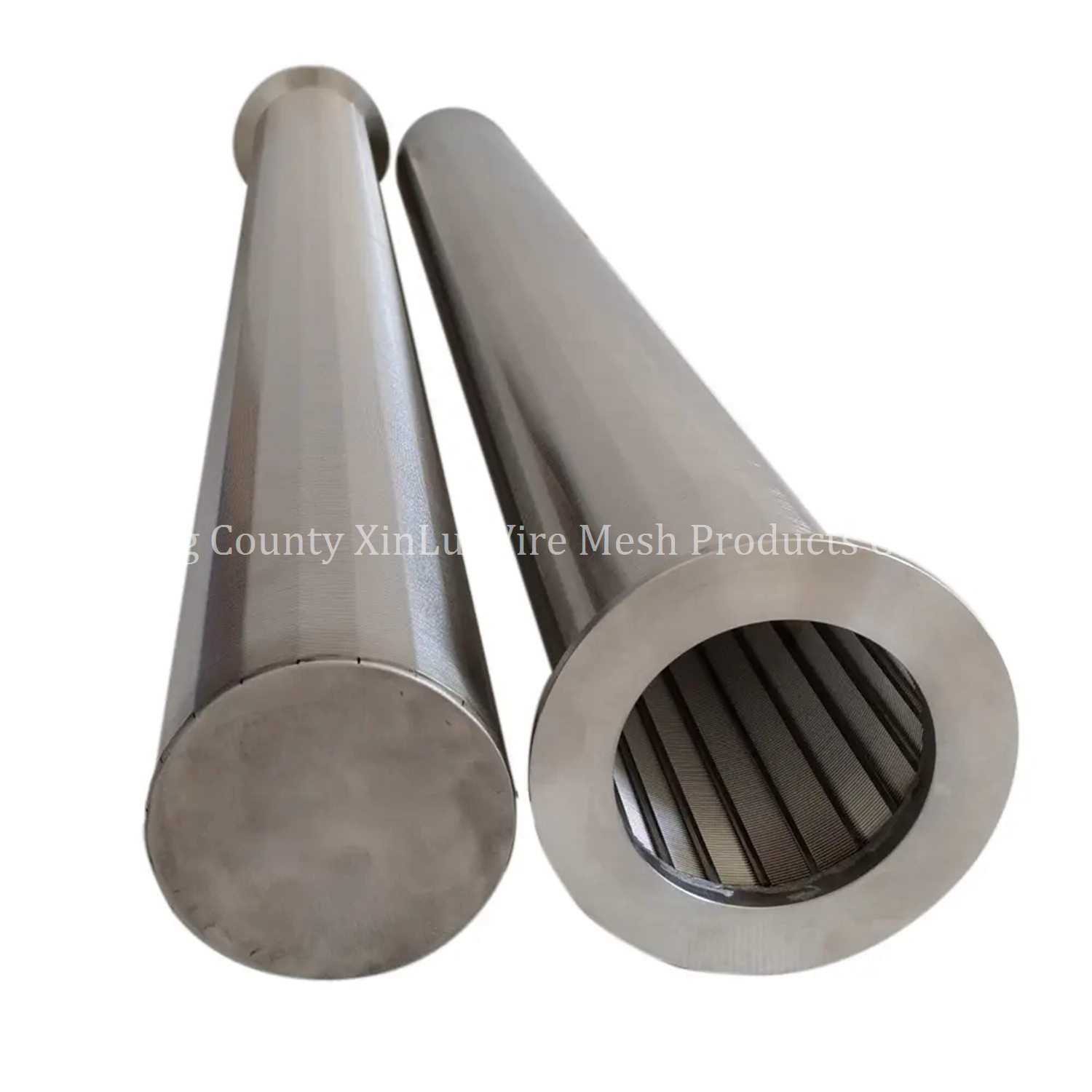
Neglected water well infrastructure creates massive operational liabilities. When operators ignore basic maintenance, they see reduced specific capacity almost immediately. This neglect accelerates pump wear. It also causes exponential spikes in energy costs. You cannot treat well maintenance as a reactive fix. You must position it as a core risk management strategy. Proactive care prevents sudden, catastrophic yield loss.
This guide provides a clear framework to evaluate screen conditions accurately. We will show you how to choose between rehabilitation and replacement effectively. You will also learn how to vet manufacturing partners for future upgrades. High-performing Water Well Screens depend on consistent, scheduled care. By following these guidelines, you maximize infrastructure lifespan and ensure reliable water yields for your operations.
Key Takeaways
Routine monitoring of specific capacity and drawdown is the most reliable indicator of screen fouling.
Maintenance approaches divide strictly into mechanical and chemical rehabilitation; selecting the wrong method risks catastrophic screen failure.
When maintenance yields diminishing returns, partnering with a high-quality wedge wire screens manufacturer for replacement is often more cost-effective than continuous rehabilitation.
Compliance with local groundwater protection regulations is mandatory during any chemical maintenance procedure.
The Financial and Operational Impact of Screen Fouling
Business Problem Framing
Screen fouling destroys well efficiency. It happens through three main mechanisms. Biofouling occurs when iron-reducing bacteria create thick slime. Mineral scale builds up when calcium and magnesium precipitate out of the water. Physical blockages happen when fine silt and clay pack tightly around the screen exterior. These problems compound quickly over time. As open areas shrink, water velocity increases. This higher velocity pulls in more sediment. It also accelerates mineral scaling. The compounding effect drives up operational costs significantly.
Success Criteria for Maintenance
You must define what successful intervention looks like before starting any work. A successful rehabilitation project should return well yield to at least 80% of its original baseline. It must also stabilize pump energy consumption. If your pump draws fewer amps to produce the same gallons per minute, the maintenance worked. Clear success criteria prevent contractors from performing incomplete cleanings. They also provide measurable data for your maintenance records.
Secondary Risks
Fouled screens cause cascading damage throughout your water system. When screens clog, drawdown increases. This forces submersible pumps to work harder. They overheat easily under these conditions. Extreme flow velocities also pull abrasive sand through the screen. This sand acts like sandpaper inside your expensive submersible pumps. It destroys impellers and seals rapidly. Furthermore, sand pumping overwhelms surface filtration equipment. You will spend more time changing surface filters. You will also face premature pump replacement costs.
Core Maintenance Approaches: Mechanical vs. Chemical Rehabilitation
Solution Categories
You can divide maintenance strictly into two categories. Mechanical rehabilitation physically disrupts blockages. Chemical rehabilitation dissolves them. You must choose the right category based on the specific type of fouling.
Mechanical Rehabilitation
Mechanical methods physically remove debris. Brushing uses heavy wire or nylon bristles to scrub the interior walls. Surging uses solid blocks to push water violently back and forth through the slots. Sonicating employs localized shockwaves to break apart rigid crusts. High-pressure jetting sprays targeted water streams directly into the slots. These methods work best for physical blockages like packed silt. However, they carry significant risks. Aggressive mechanical force can easily damage compromised or heavily corroded screens.
Chemical Rehabilitation
Chemical methods dissolve organic and inorganic matter. Acidizing targets hard mineral scale. Operators use hydrochloric or sulfamic acids to dissolve calcium carbonate deposits. Biocides target living blockages. Operators use chlorine solutions or specialized biocides to kill iron-reducing bacteria and sulfate-reducing bacteria. Chemicals penetrate deep into the surrounding gravel pack. They reach areas that mechanical tools cannot touch.
Combination Strategies
Sequential application represents the industry standard for severe fouling. You should rarely use chemicals alone. Biofilms create protective slime layers. Acids and biocides cannot penetrate thick slime easily. You must use mechanical disruption first. Brushing and surging break the protective outer crust. After this mechanical disruption, you apply the chemical treatment. The chemicals can now reach the underlying bacteria and scale. This sequential combination ensures a complete, lasting clean.
Implementation Risks
You must exercise extreme caution with mechanical methods. Old louvered or slotted screens suffer from unseen corrosion. Their structural integrity weakens over decades of use. If you use aggressive surging blocks inside a corroded screen, the metal can collapse. A collapsed screen traps your maintenance equipment downhole. It also destroys the well permanently. Always verify structural integrity before applying heavy mechanical force.
Mechanical vs. Chemical Comparison Chart
Use the following summary chart to understand the distinct roles of each rehabilitation approach.
Approach Category | Primary Target | Common Techniques | Key Limitation |
Mechanical | Silt, clay, physical crusts | Brushing, surging, jetting, sonicating | Can collapse weakened, corroded metal. |
Chemical (Acidizing) | Mineral scale (Calcium, Iron) | Hydrochloric acid, Sulfamic acid | Requires careful handling and effluent neutralization. |
Chemical (Biocides) | Bacterial slime, Biofouling | Chlorine compounds, specialized biocides | Ineffective if thick outer biofilms remain physically intact. |
Evaluation Framework: When to Maintain vs. When to Replace
Performance Metrics
You need clear thresholds for intervention. Do not wait for complete failure. Track your specific capacity regularly. Specific capacity measures gallons per minute divided by feet of drawdown. A 25% decrease in specific capacity indicates immediate maintenance is required. If you wait until capacity drops by 50%, rehabilitation becomes much harder. Early intervention requires fewer chemicals. It also demands less aggressive mechanical force. Consistent monitoring allows you to schedule maintenance during planned downtimes.
Evaluating Screen Integrity
Never invest in chemical treatments without looking downhole first. You must evaluate structural degradation. Hire a contractor to perform a downhole video inspection. They lower a specialized pan-and-tilt camera into the casing. This visual evidence reveals holes, severe corrosion, or separated joints. If the camera shows widespread structural failure, chemical treatments waste money. Acids will actually accelerate the deterioration of compromised metal. Use video evidence to justify replacement over continued rehabilitation.
The Financial Equation: OpEx vs. CapEx
You must compare recurring operational costs against replacement costs. Chronic fouling requires frequent interventions. Calculate the operational expenditure (OpEx) of biannual chemical treatments. Include contractor labor, chemical costs, and lost production time. Compare this cumulative expense against the capital expenditure (CapEx) of a total well rehabilitation or screen replacement. When the recurring cost of cleaning exceeds the amortized cost of new infrastructure, replacement becomes the logical choice. Continuous rehabilitation of a failing asset drains your maintenance budget unnecessarily.
Intervention Decision Matrix
The table below outlines common triggers and the recommended financial and operational decisions.
Observed Condition | Diagnostic Tool | Recommended Action | Financial Classification |
10-25% drop in specific capacity | Routine draw-down testing | Schedule standard sequential rehabilitation. | Routine OpEx |
>40% drop in specific capacity | Downhole camera + pump test | Aggressive chemical/mechanical combo. Prepare for possible failure. | High OpEx |
Visible holes or severe casing corrosion | Downhole pan-and-tilt camera | Halt maintenance. Plan for liner installation or new drilling. | CapEx / Replacement |
Massive sand intrusion post-cleaning | Surface filter inspection | Replace screen to protect submersible pump assets. | CapEx / Replacement |
Sourcing Replacements: Choosing a High-Quality Wedge Wire Screens Manufacturer
Material Superiority
When you decide to replace, material selection dictates future performance. Traditional perforated pipe clogs easily. Its straight-cut holes trap irregular sand grains. V-shaped profile wire solves this problem completely. We call this design wedge wire. The slot widens inward. If a particle passes the outer edge, it continues freely into the well. It cannot get stuck halfway. This self-cleaning geometry resists clogging naturally. It reduces future maintenance frequency drastically compared to traditional louvered or slotted alternatives.
Evaluation Dimensions for Manufacturers
Not all manufacturers produce identical quality. You must evaluate them across three strict dimensions.
Custom slot sizing capabilities: The manufacturer must analyze your specific aquifer formation. They should size the slots precisely based on your sand samples. Generic slot sizes lead to sand pumping or premature clogging.
Material traceability: Corrosive environments demand superior alloys. You must ensure the manufacturer provides material test reports (MTRs). They should guide you between 304 and 316L stainless steel based on your water chemistry.
Strength certifications: Deep wells experience massive geological pressure. The vendor must provide documented collapse strength and tensile strength certifications. These documents prove the screen will survive installation and long-term aquifer compression.
Vendor Shortlisting Logic
Procurement requires careful vendor assessment. Partnering with a high-quality wedge wire screens manufacturer guarantees better operational outcomes. Assess their technical support first. Good manufacturers act as engineering partners, not just fabricators. Ask about lead times next. Extended lead times prolong your operational downtime. Finally, review their warranty structures. Strong warranties indicate manufacturing confidence. A reliable vendor supports their product long after delivery.
Implementation Considerations and Regulatory Compliance
Environmental Safety
Chemical maintenance creates hazardous waste. You cannot simply pump acid or heavy biocides out onto the ground. Managing chemical effluent post-rehabilitation is mandatory. You must pump the waste into temporary holding tanks. Once contained, you must neutralize the pH. You add soda ash to acidic effluent until it reaches a neutral pH level. You must also neutralize chlorine residues. You neutralize them using specific dechlorinating agents. Always test the effluent before final discharge. Local environmental agencies issue massive fines for improper chemical disposal.
Contractor Vetting
Your well service provider determines the success of the project. You must vet them thoroughly.
Material Experience: Ensure they have specific experience with your exact screen material. Stainless steel requires different brushing techniques than PVC.
Depth Capabilities: Verify their equipment matches your well depth. Deep wells require specialized surging blocks and high-capacity hoists.
Chemical Knowledge: Ask about their chemical mixing protocols. They must understand how different acids react with specific mineral scales.
Post-Maintenance Baseline
The maintenance process does not end when the contractor leaves. You must establish a new performance baseline immediately. Conduct a formal step-drawdown test. This test involves pumping the well at multiple, increasing flow rates. You record the water level drawdown at each step. This data proves the effectiveness of the rehabilitation. It also gives you a fresh benchmark. You will compare all future specific capacity readings against this new baseline. Without this test, your ongoing monitoring program lacks accurate reference points.
Conclusion
Effective groundwater management demands a clear, proactive decision matrix. You must monitor specific capacity routinely. When performance drops by 25%, you must choose the appropriate sequential rehabilitation method based on downhole video evidence. You must also recognize when structural failure makes further cleaning a waste of capital.
Do not wait for critical yield failure. We recommend establishing a documented, schedule-based maintenance protocol today. Take the following actionable steps:
Install continuous monitoring equipment to track specific capacity automatically.
Schedule downhole video inspections every three to five years, regardless of performance.
Calculate your recurring cleaning costs to determine your break-even point for replacement.
Pre-qualify a reliable manufacturer now, so you are prepared when sudden replacement becomes necessary.
FAQ
Q: How frequently should water well screens be cleaned?
A: Cleaning frequency depends entirely on local aquifer chemistry. Highly mineralized or bacteria-rich environments may require annual cleaning. Stable aquifers might only need maintenance every five to ten years. Monitor your specific capacity. Clean the well whenever capacity drops by 20% to 25% from the original baseline.
Q: What are the signs that a water well screen needs replacement rather than cleaning?
A: Replacement is necessary when downhole video inspections reveal visible holes, separated joints, or severe generalized corrosion. Additionally, if the well pumps significant amounts of sand immediately after a thorough cleaning, the structural integrity has likely failed. At this point, chemical treatments will only worsen the damage.
Q: Can aggressive chemical treatments damage stainless steel water well screens?
A: High-quality stainless steel resists most standard chemical treatments well. However, if you use overly concentrated hydrochloric acid without proper inhibitors, it can cause pitting. Additionally, applying harsh acids to screens that are already heavily corroded can accelerate their structural collapse.
Q: Why are wedge wire screens considered lower maintenance than slotted PVC?
A: Wedge wire features a V-shaped, continuous slot design that widens inward. This self-cleaning geometry prevents particles from getting stuck midway through the opening. Slotted PVC features straight-cut holes that easily trap irregular sand grains, leading to faster clogging and requiring more frequent mechanical brushing.
Q: How much does professional well screen rehabilitation typically cost compared to replacement?
A: Professional sequential rehabilitation generally costs a fraction of total replacement. While complex chemical and mechanical cleanings require significant labor and equipment, drilling a new well or installing a complete downhole liner involves heavy capital investment, new materials, and extended operational downtime.


