Well screen encrustation acts as a silent killer for groundwater extraction systems. Mineral precipitation and sticky biofilm accumulation choke off water flow deep underground. This operational threat rapidly degrades well efficiency. It also destroys expensive pumping infrastructure if left unaddressed. Hydraulic efficiency relies entirely on intelligent screen design to control these exact failure points. You must understand the direct correlation between your well screen specifications and the rate of biological or mineral encrustation. Continuous slot wedge wire serves as the engineered standard in the groundwater industry today. It fundamentally extends well lifespan and stabilizes ongoing pumping operational expenditures. In this comprehensive guide, we will explore the physical and chemical mechanics behind well encrustation. You will learn how precision-engineered screens manipulate fluid dynamics to keep aquifers flowing freely. We will also examine critical evaluation criteria for selecting materials capable of resisting severe fouling.
Key Takeaways
Lower Entrance Velocity: High open-area designs minimize pressure drops, the primary trigger for chemical mineral precipitation.
Self-Cleaning Geometry: V-shaped wire profiles widen inward, allowing particles to pass through rather than lodging and forming encrustation nodes.
Material Superiority: High-grade stainless steel resists bio-fouling and chemical corrosion better than slotted PVC or carbon steel.
ROI vs. Upfront Cost: Specifying a precision-engineered screen prevents premature well rehabilitation costs and catastrophic pump failures.
The Operational Cost of Well Encrustation
You must first frame well encrustation as a severe business problem. Scaling and biofilm severely restrict fluid flow into the well casing. This biological and mineral chokehold directly reduces specific capacity. It limits your total well yield significantly. As scale builds up around the intake, less water enters the wellbore per unit of time. Operations suddenly face critical water shortages.
Consider the daily energy expenditure. Pumps must work harder when encrustation restricts fluid entry. You experience increased drawdown as water levels inside the well drop faster than the aquifer can replenish them. Submersible pumps must push water from a much deeper dynamic level. They consume significantly more electricity during this process. You will burn through operational budgets quickly when pumps run longer to yield the same daily volume.
Equipment degradation follows closely behind energy waste. Encrusted screens force turbulent fluid flow inside the well. This violent turbulence causes premature pump wear. It induces damaging cavitation along the pump impellers. You also risk complete motor burnout. Submersible motors require fast-flowing water for proper cooling. Furthermore, high-velocity entry points pull fine sand directly through the partially blocked screen areas. Pumping sand destroys impellers in a matter of days.
Encrustation Stage | Flow Restriction | Energy Impact | Equipment Risk Level |
Early Stage | 10% - 20% capacity loss | Slightly increased drawdown | Low (Minor wear) |
Moderate Stage | 30% - 50% capacity loss | High electricity consumption | Medium (Cavitation risk) |
Severe Stage | Over 60% capacity loss | Unsustainable pumping costs | Critical (Motor burnout, sand pumping) |
How a Wedge Wire Screen Tube Defeats Mineral Buildup
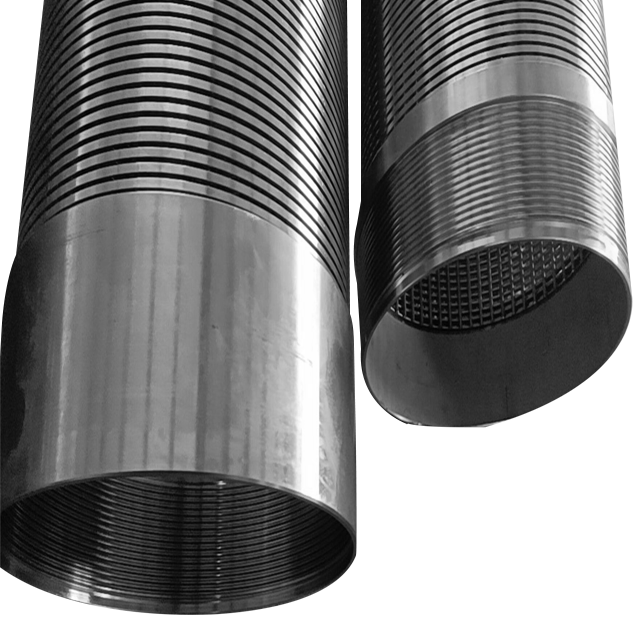
We must examine the specific physical and hydraulic mechanisms solving this scaling problem. Proper structural design actively resists scaling. A well-engineered Wedge Wire Screen Tube manipulates fluid dynamics to protect the wellbore.
Minimizing Pressure Drop (The Chemical Factor)
Pressure drops trigger chemical precipitation. Dissolved minerals like calcium carbonate remain perfectly stable under uniform underground pressure. However, water often forces its way through heavily restricted standard pipe slots. When this happens, pressure drops rapidly at the screen interface. Minerals instantly precipitate out of the water. They form hard scale on the casing.
Wedge wire designs offer maximum open area. This open space keeps entrance velocities well below critical thresholds. Industry standards dictate keeping this velocity under 0.1 feet per second. Slow, even fluid entry minimizes pressure differentials across the screen face. It practically stops chemical scaling before it even begins.
The V-Shape Profile (The Mechanical Factor)
We must contrast standard slotted pipes against V-wire geometry. Standard pipes feature parallel cut slots. These straight cuts trap sand particles easily. Wedged grains create permanent foundation points for scale and iron bacteria to grow.
V-wire geometry solves this mechanically. The screen features an inward-widening slot design. If a grain of sand passes the outer edge, it flows freely inside. It never wedges halfway through the metal. This self-cleaning geometry fundamentally stops encrustation nodes from taking hold.
Surface Smoothness (The Biological Factor)
Biological fouling ruins wells just as quickly as mineral scale. Iron-oxidizing bacteria thrive in specific environments. Rough louvered or perforated carbon pipes give these bacteria perfect places to anchor and multiply. Precision-welded stainless steel offers incredible surface smoothness. Smooth stainless steel naturally inhibits biofilm attachment. Slime and bacteria simply cannot grip the polished metal surface effectively.
Evaluating Water Well Screens for Long-Term Performance
Engineers need a reliable framework for comparing structural specifications. You must carefully evaluate Water Well Screens based on precise geological and chemical data.
Slot Size Precision
You must match your slot size exactly to the aquifer formation. Many operators use a surrounding gravel pack. You must size the slots to retain this gravel perfectly. Inaccurate slot sizing causes sand bridging. Bridging clogs the outer envelope and causes localized encrustation. Precision manufacturing ensures continuous, uniform slot sizing across the entire pipe.
Metallurgical Grade Selection
Water chemistry reports should dictate your metal choice. Always test for pH, chlorides, and dissolved oxygen. You typically choose between 304L and 316L stainless steel alloys. 304L serves perfectly well for benign freshwater aquifers. However, high-chloride environments demand 316L. We acknowledge the higher upfront material cost of 316L. You must frame this against massive lifecycle savings. Avoiding early well failure in corrosive environments easily justifies the initial material upgrade.
Alloy Grade | Corrosion Resistance | Ideal Environment | Relative Upfront Cost |
304L Stainless Steel | High | Standard freshwater, neutral pH | Moderate |
316L Stainless Steel | Very High | High chlorides, coastal aquifers | Premium |
Structural Integrity
Deep well applications present unique structural challenges. You must balance maximum open area against required collapse strength. More open space improves hydraulic efficiency. It also weakens the pipe laterally. Deep geological formations exert immense crushing pressure. Engineers must specify thicker support rods and stronger wrap wires to maintain tensile strength without sacrificing fluid flow.
Best Practices for Screen Evaluation:
Always conduct a comprehensive water quality test before selecting your metallurgical grade.
Request computer-modeled collapse strength data for depths exceeding 500 feet.
Never guess your slot size. Always perform a physical sieve analysis on formation samples.
Implementation Risks and Design Compromises
We need an evidence-oriented reality check regarding well construction. Procurement departments often prioritize price over engineering precision. This approach reliably guarantees premature well failure.
Welding Distortions
Cheaply manufactured screens introduce massive implementation risks. Bargain manufacturers often struggle with heat control. This causes severe welding distortions. These distortions create inconsistent slot widths along the pipe. A slot designed for 0.020 inches might warp to 0.040 inches. These gaps become high-velocity fluid hotspots. Localized encrustation accelerates rapidly at these specific failure points.
Improper Sizing Mistakes
Improper sizing ruins otherwise healthy wells. Many contractors rely heavily on standard off-the-shelf slot sizes to save time. They skip conducting a proper sieve analysis of the exact aquifer material. Oversized slots pump endless sand. Undersized slots choke the well immediately. Both mistakes trigger extreme pressure drops and rapid mineral scaling.
Maintenance Assumptions
We must clarify a critical maintenance reality. Wedge wire designs fundamentally prevent rapid encrustation. They do not grant eternal immunity. Periodic chemical or mechanical rehabilitation remains a necessary reality. You must still perform routine well maintenance programs. Standardizing on stainless steel simply ensures the casing survives aggressive acid cleaning and mechanical surging when maintenance day finally arrives.
Common Mistakes to Avoid:
Installing cheap screens with visible weld spatter or warped support rods.
Skipping the sieve analysis to buy locally stocked, incorrectly sized casing.
Ignoring early warning signs of dropping specific capacity until the pump fails completely.
Partnering with a High-Quality Wedge Wire Screens Manufacturer
Selecting the right supply partner determines the ultimate success of your drilling project. You must establish strict shortlisting logic before purchasing critical infrastructure. A high-quality wedge wire screens manufacturer provides far more than just raw metal pipe.
Engineering Support
Look for manufacturing partners offering comprehensive engineering support. They should provide detailed hydraulic calculations upfront. Require them to produce collapse strength modeling for your specific well depth. They must also supply entrance velocity data proving their design stays below the critical 0.1 ft/sec threshold.
Manufacturing Tolerances
Demand absolute precision. Require formal documentation detailing their slot tolerance consistency. They should operate under strict ISO-certified quality control processes. Ask for inspection reports verifying the wire profiles match the approved blueprints exactly.
Customization Capabilities
Aquifers rarely conform to standard catalog dimensions. Ensure your manufacturer can adapt wire profiles easily. They should customize support rod configurations for extra tensile strength when needed. They must also supply specific end-fittings, threaded couplings, or weld-rings adapted to your site-specific drilling requirements.
Next Steps for Procurement
We recommend requesting physical sample specifications immediately. Conduct a thorough operational longevity evaluation. Compare the durability of continuous slot wedge wire against standard slotted casing. You will quickly see how precision engineering protects your long-term infrastructure investments.
Conclusion
Preventing mineral and biological encrustation remains fundamentally a hydraulic and geometric challenge. Continuous slot designs solve this problem better than any alternative. They eliminate pressure drops and physically reject lodged particles. Investing in precision-engineered screens acts as your primary risk mitigation strategy. It protects your entire downstream water extraction infrastructure from premature failure.
Actionable Next Steps:
Audit your current well performance data to identify any sudden drops in specific capacity.
Perform a complete sieve analysis on your target aquifer before finalizing your next screen order.
Specify exact entrance velocity maximums (under 0.1 ft/sec) in your future well construction bids.
Request material test reports and ISO certifications from your chosen manufacturer prior to installation.
FAQ
Q: What is the maximum recommended entrance velocity for water well screens to prevent encrustation?
A: The industry standard sits strictly at 0.1 feet per second (0.03 m/s). Keeping fluid entry speeds below this threshold minimizes the pressure drop across the screen face. Wedge wire designs maximize open area to maintain this low velocity naturally. This prevents dissolved minerals from precipitating out of the water and forming hard scale on your equipment.
Q: Can an encrusted wedge wire screen be cleaned?
A: Yes, operators clean them routinely. Standard rehabilitation methods include acidizing, high-pressure jetting, and mechanical surging. Stainless steel wedge wire withstands highly aggressive chemical cleaning much better than standard PVC screens. The inward-widening V-shape makes mechanical surging highly effective. Reversing the flow easily pushes trapped particles back out into the surrounding geological formation.
Q: How long do wedge wire screens last compared to slotted pipes?
A: Stainless steel wedge wire often outlasts the mechanical life of the well itself. Standard slotted PVC may degrade, crack, or clog heavily within a decade depending on water chemistry. Precision-welded stainless screens resist both chemical corrosion and mechanical stress. They maintain their structural integrity and open flow area for several decades under normal pumping conditions.
Q: Does a wedge wire screen tube eliminate the need for a gravel pack?
A: It does not eliminate the need entirely, but it adapts perfectly to both construction methods. Naturally developed wells rely purely on precise screen slotting to filter native aquifer sands. Gravel-packed wells use an artificial filter envelope around the screen. You must select the specific wire profile and slot size based directly on whichever method your specific geological formation requires.


