WhatsApp: +8613315867171 Email: starlee@feiyaguoji.com

- All
- Product Name
- Product Keyword
- Product Model
- Product Summary
- Product Description
- Multi Field Search

Views: 0 Author: Site Editor Publish Time: 2026-06-12 Origin: Site


Industrial filtration serves as a critical variable in operational uptime, maintenance reduction, and overall system longevity. It represents far more than just a basic technical requirement. If you select the wrong filtration media, your process faces premature clogging and unacceptable pressure drops. In aggressive chemical or thermal environments, poor media choices can rapidly lead to catastrophic system failure. We want to help you prevent these expensive operational disruptions. This comprehensive guide provides technical buyers and engineers with an objective, data-driven framework. We will explore how to evaluate various filter materials and structural configurations effectively. You will also discover proven procurement strategies to help you balance rigorous performance demands against your strict operational constraints. By applying these engineering principles, you can confidently protect your downstream equipment and ensure continuous fluid processing.
Material matching is application-specific: Stainless steel is the industry baseline, but aggressive chemical or thermal environments require specialty alloys like nickel or titanium.
Structure dictates performance: The choice between woven wire mesh and alternatives (like metal felt) hinges on the trade-off between cleanability and dirt-holding capacity.
Multi-layered systems add complexity: Metal mesh often serves dual roles—either as the primary absolute filtration layer or as a structural support substrate.
Procurement requires strict validation: Sourcing requires validating micron tolerances, structural integrity, and material compliance before scaling to bulk orders.
You face a constant balancing act when designing any industrial filtration system. Your primary goal involves achieving a target particle retention rate. Simultaneously, you must minimize the differential pressure drop across the filter element. You also need to maximize the overall fluid flow rate. When you restrict flow too aggressively, pump efficiency plummets. This wastes energy and damages delicate equipment.
Modern setups rarely rely on a single filter layer. Instead, they utilize multi-layered architectures. In these complex arrays, Metal Mesh operates dynamically. Sometimes, it acts as the primary absolute filtration medium. In this role, it actively captures fine particulates from the process stream. Other times, it serves purely as a mechanical support grid. Delicate depth media or membrane layers cannot withstand high differential pressures alone. A coarse wire grid provides the necessary structural backing. This prevents delicate media from tearing or collapsing during heavy operation.
How do we objectively evaluate these materials? We must establish strict performance baselines before specifying a purchase. Engineers evaluate media using three primary metrics:
Micron Rating Accuracy: This ensures predictable particle cut-offs. You need exact geometric openings to guarantee process compliance.
Structural Rigidity: The material must resist deformation under high pressure. If wires shift, the pore sizes expand unpredictably, causing bypass.
Thermal Expansion Coefficients: System temperatures fluctuate wildly in process plants. The metal must maintain geometric stability during extreme heating cycles. If it expands unevenly, it compromises the filtration tolerance.
Material selection dictates the physical survival of your filter. We evaluate several key metallurgical options based on your specific operating environment.
We start our evaluation with standard 304 and 316L stainless steel. These alloys stand as the versatile, reliable baseline for standard industrial operations. You will see them predominantly in municipal water treatment, light oil processing, and commercial HVAC applications. They offer excellent corrosion resistance for general use. The addition of molybdenum in 316L provides extra protection against mild chlorides. However, they possess distinct limitations in extreme environments.
Standard alloys degrade quickly in highly caustic chemical conditions. Here, you must upgrade your materials. We recommend utilizing Customizable Nickel Mesh. This material truly shines in highly corrosive environments. We frequently specify it for aggressive chemical processing and alkaline fluid filtration. It boasts vastly superior resistance to caustics like sodium hydroxide when compared directly to standard stainless steel. Furthermore, you can request specific weave modifications. This helps engineers manage high-viscosity fluids like heavy resins or polymers. The smooth surface of nickel also actively resists chemical scaling.
Some operational environments destroy standard metals in a matter of days. For these brutal conditions, Customizable Titanium Mesh becomes an absolute necessity. It easily withstands extreme operational temperatures without losing tensile strength. We see it deployed primarily in aerospace fluid systems and chloride-heavy saltwater environments. It resists pitting corrosion perfectly.
Yet, we must acknowledge a crucial, skeptical-friendly caveat. Titanium commands a massive upfront procurement premium. It can easily break tight project budgets. We advise buyers to specify this premium alloy only when absolutely necessary. You should evaluate long-term mechanical survival first. Specify titanium only when standard stainless alloys categorically fail your accelerated physical lifecycle testing.
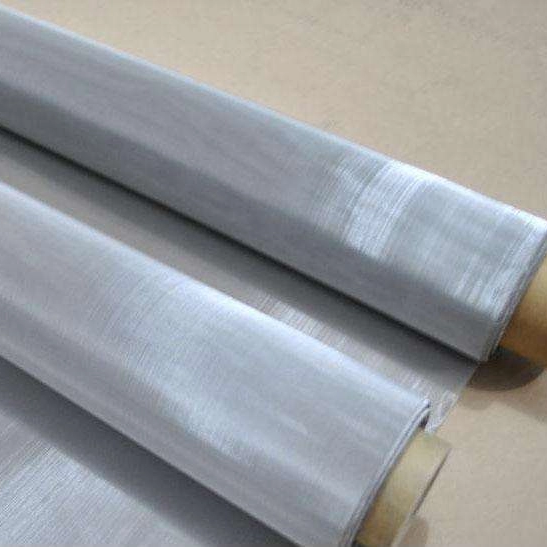
Filtration media generally falls into two distinct categories. You have surface filtration and depth filtration. We must contrast these approaches to select the correct physical structure for your application.
Woven structures rely on precisely intersecting wires to create exact openings. They stop particles directly at the outermost surface layer.
Pros: This structure offers highly precise geometric pore sizes. You get excellent cleanability through automated backwashing or ultrasonic baths. Fluid flow dynamics remain highly predictable over a long operational lifespan.
Cons: It possesses a lower overall dirt-holding capacity. Because particles accumulate only on the surface, the filter may blind faster than depth media in heavy-load scenarios.
Manufacturers create this media by compressing and thermally sintering random metal fibers. It traps particles randomly throughout its entire porous matrix.
Pros: It delivers exceptionally high porosity. You benefit from superior dirt-holding capacity. This extends the operational time between critical pressure drops significantly.
Cons: It is notoriously difficult to clean completely. Deeply embedded particles resist reverse flow backwashing. You also face a potential risk of microscopic particle shedding if the manufacturer improperly sintered the fibers.
How do you choose between them? We recommend woven surface media for applications requiring absolute particle cut-offs. If your system runs automated, frequent cleaning cycles, woven surfaces drastically outperform depth media. They recover their original permeability much faster. Conversely, choose felt when you deal with gel-like contaminants or require maximum time online before manual maintenance shutdowns.
Below is a simplified decision chart to guide your evaluation process:
Attribute | Woven Metal Structure | Sintered Metal Felt |
|---|---|---|
Filtration Mechanism | Surface Filtration | Depth Filtration |
Dirt Holding Capacity | Low to Moderate | Very High |
Cleanability (Backwash) | Excellent | Poor to Fair |
Pore Size Precision | Absolute / Exact Geometric | Nominal / Statistical Average |
Primary Use Case | Rigid particle capture, frequent cleaning | Gel capture, extended lifecycle runs |
Different fluids behave uniquely at the microscopic level. Your filtration setup must adapt to these specific physical dynamics to prevent system failure.
When filtering liquids, you face several compounding challenges. You must focus primarily on corrosion resistance and managing pressure scaling. As filters capture dirt, liquid pressure rises exponentially. The structural weave must handle this severe mechanical stress. Preventing biofilm buildup remains a constant priority in municipal and industrial water treatment. Microbes attach easily to rough, unpolished surfaces. We often recommend electropolishing to mitigate this risk.
Viscosity drastically changes the rules. High-viscosity liquids demand very specific wire tensioning during manufacturing. They also require specialized open weave patterns to prevent rapid blinding. Standard water treatment allows for much tighter, traditional plain weaves.
Air filtration presents entirely different aerodynamic challenges. You want to maximize pure airflow. At the same time, you must manage high-velocity particulate impacts. Fast-moving dust acts like sandblasting equipment against weak wires. We often recommend specialized structural configurations here. Dutch weaves serve as excellent examples. They offer immense mechanical strength. Despite this robust density, they maintain remarkably low resistance to rapid gas flow.
Food, beverage, and pharmaceutical industries add another rigid layer of complexity. These sectors demand strict FDA or USP compliance. You must secure specific material certifications. These documents verify the metal remains non-toxic. They also prove the surface will not leach harmful heavy metals into the consumable product stream.
You can engineer the perfect theoretical system. However, poor sourcing practices will ruin it instantly. We must address common implementation risks head-on to protect your investment.
Substandard manufacturing introduces massive failure points. Inconsistent wire diameters alter your carefully calculated micron rating. Improper tensioning during the weaving process creates structural weak spots. Poor edge treatments lead to dangerous wire fraying. Frayed wires break off and cause severe downstream system contamination, potentially destroying sensitive pumps or nozzles.
Moving from a successful lab prototype to full production requires deliberate care. You must follow a structured validation process before committing to large volumes.
Verify the supplier's custom weaving capabilities first. Ask them to produce a small batch matching your exact micron rating.
Confirm their access to specialty raw materials. Can they source pure nickel or titanium reliably without extended delays?
Test the prototype batch under actual plant conditions for at least two weeks to monitor pressure differentials.
When ordering wholesale Metal Mesh, you must navigate distinct economic realities. Minimum order quantities (MOQs) often dictate your purchasing timeline. You must balance the MOQ against your facility storage capacity. Lead times pose another significant hurdle. Specialty metals carry much longer lead times than standard stainless steel. You must plan production schedules around these manufacturing delays. Furthermore, batch-to-batch consistency is absolutely critical. You cannot accept woven rolls that perform differently from one month to the next.
We advise technical buyers to demand strict documentation. Trust means nothing without verifiable proof in industrial engineering. Always require material test reports (MTRs) for every shipped batch. These reports detail the exact chemical composition of the melt. You should also ask for verifiable ISO 9001 certifications. These international standards ensure the factory maintains strict quality control over alloy authenticity and weave precision.
Do not buy based solely on the lowest price per square foot. Cheap materials often contain recycled scrap metal. This ruins the corrosion resistance profile. Also, do not ignore the packaging standards. Poorly packaged rolls sustain crushing damage during international transit. This permanently warps the pore structure before you even install the media into your machinery.
We can summarize the entire media selection process into a logical shortlisting funnel.
Step 1: Define your exact fluid or gas constraints, noting temperature, pressure, and viscosity.
Step 2: Select a baseline stainless alloy or upgrade to a specialty metal if the environment demands it.
Step 3: Determine the optimal structural weave based on cleanability requirements and dirt-holding capacity needs.
Step 4: Validate your supplier's certifications, MOQs, and bulk production capabilities.
Do not rush the final integration phase. We strongly encourage process engineers to request physical material samples first. Always review the technical data sheets (TDS) thoroughly. Run local pressure-drop tests in your own facility. Verify chemical compatibility in a controlled laboratory setting. By taking these proactive next steps, you guarantee your chosen media performs flawlessly before committing to a full-scale integration.
A: An absolute rating guarantees the maximum possible pore size. No particle larger than this specific micron rating will pass through the media. A nominal rating represents merely an average pore size across the surface. We consider absolute ratings critical for strict compliance, safety, and precise quality control.
A: It is justified only in extreme operating environments. High-chloride waters, extreme-heat chemical processes, and weight-sensitive aerospace applications demand it. In these specific scenarios, the failure rates of standard stainless steel result in massive long-term downtime costs. These recurring maintenance penalties easily exceed titanium's initial procurement premium.
A: You must demand strict documentation from your manufacturing partner. Always require Mill Test Reports (MTRs) to verify the exact alloy composition. Ask for optical inspection data to confirm uniform pore size distribution. We highly recommend ordering small prototype batches for field testing prior to finalizing bulk purchases.
A: Yes. Woven media provides excellent surface filtration characteristics. This physical structure keeps trapped particles on the outer layer rather than embedding them deeply. As a result, it is highly suited for automated backwash systems. It recovers permeability rapidly, unlike porous depth filtration media which resists complete cleaning.


