

Views: 0 Author: Site Editor Publish Time: 2026-08-06 Origin: Site


Filtration failure directly impacts operational uptime and product quality on the plant floor. Off-the-shelf screens force compromises in flow rates, pressure drops, and structural integrity. Standardized filtration media cannot accommodate unique fluid dynamics, extreme corrosive environments, or non-standard equipment geometries. This rigid approach leads to premature wear, frequent blinding, and increased maintenance demands that disrupt workflows.
Specifying a Custom Wedge Wire Screen requires a rigorous evaluation of profile geometries, metallurgy, and manufacturing tolerances. Engineers and procurement teams must evaluate custom options, mitigate implementation risks, and select a reliable manufacturing partner capable of delivering precise filtration media tailored to specific operational parameters. You need components built to handle exact differential pressures and specific particulate loads without failing.
Operational thresholds frequently exceed the capabilities of standard filtration media. When processes involve high differential pressures, specific particle morphologies, or strict sanitary requirements, generic screens fail. A custom filtration screen addresses these exact pain points by adapting to the precise demands of the fluid environment rather than forcing the process to adapt to the screen. We see standard mesh tear under heavy loads or blind completely when handling irregular particulates.
Custom engineering allows for the exact calculation of the open area percentage required to maintain optimal flow velocity while preventing particle pegging. The open area directly influences the pressure drop across the screen surface. By customizing the profile wire width and the slot opening, engineers maximize the open area without compromising the structural integrity required to retain targeted particulates. This precise balance ensures fluid passes through efficiently, reducing the energy required for pumping and minimizing the risk of localized velocity spikes that cause uneven wear. If you miscalculate the open area, you risk pump cavitation or rapid media degradation.
Mechanical deformation under heavy loads or high-vibration conditions causes immediate filtration failure. Custom configurations address this by specifically tailoring wire thickness and support rod spacing to the anticipated stress. In applications subject to severe hydraulic shocks or heavy solid loading, increasing the depth of the support rods or utilizing a heavier profile wire prevents the screen from collapsing or bowing. This customized structural reinforcement ensures the screen maintains its precise slot tolerances even under extreme operational duress. We regularly replace standard screens that have pancaked under unexpected pressure surges because the support rods were undersized.
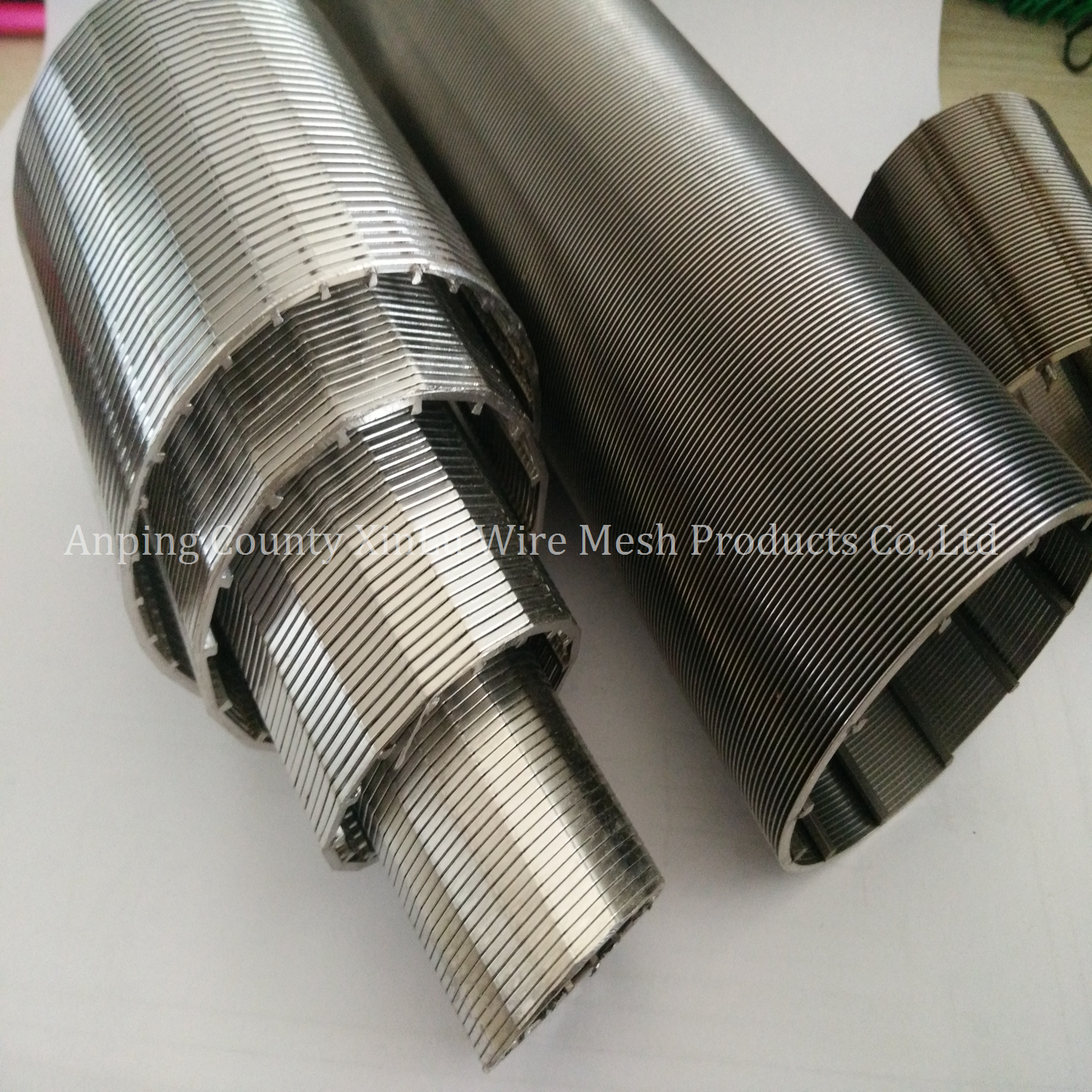
Designing an effective custom slot size screen requires a deep understanding of the physical geometry of the screen components and how they interact with the process flow. You cannot guess these dimensions; they must be calculated based on fluid viscosity, particulate size, and flow rate.
The core of wedge wire technology lies in the relationship between the V-shaped profile wire and the underlying support rods. The angle and depth of the wire profile directly impact the self-cleaning capabilities and the relief angle of the screen. A steeper relief angle ensures that any particle passing through the narrowest point of the slot will continue to pass through without getting lodged, effectively preventing blinding. Matching these wire profiles to specific load-bearing requirements involves calculating the section modulus of the wire and selecting a profile that provides adequate strength while maintaining the necessary open area.
| Profile Wire Type | Relief Angle | Best Application | Structural Strength |
|---|---|---|---|
| Standard V-Wire | Moderate | General water filtration, sizing | Medium |
| Heavy-Duty V-Wire | Steep | Mining slurries, high-impact zones | High |
| Flat Top Wire | Minimal | Dewatering, vibrating panels | Very High |
| Conical Wire | Very Steep | Sticky particulates, resin traps | Medium |
Manufacturing continuous slots down to 0.02mm (20 microns) requires exceptional precision. The technical reality of this process involves advanced welding techniques that fuse the profile wire to the support rods at exact intervals. Acceptable tolerance deviations must be strictly defined during the specification phase. These deviations impact whether the screen provides absolute or nominal filtration ratings. An absolute rating guarantees that no particles larger than the specified size will pass through, which protects sensitive downstream equipment and meets strict product purity standards. If your tolerance is off by even a few microns, you will contaminate the entire batch.
The orientation of the screen surface relative to the fluid flow is a critical design parameter. Standard Flow (Flow-Out-to-In or FOTI) typically utilizes the smooth outer surface of a cylindrical screen for filtration, while Inverted Flow (Flow-In-to-Out or FITO) places the smooth surface on the interior. Custom manufacturing adapts these internal and external surfaces based on the direction of the process fluid and the specific backwashing requirements. For instance, an inverted flow design is often utilized in automatic backwashing filters where a rotating cleaning mechanism sweeps the internal surface.
Engineering differences dictate the selection among flat panels, cylindrical screens, conical baskets, and sieve bends. Flat panels are often used in vibrating screens for dewatering, while cylindrical screens serve well in pipeline strainers and rotary drum thickeners. Specific form factors, such as lateral assemblies or resin traps, are customized to optimize flow distribution within closed vessels. A hub and lateral assembly must be engineered to ensure uniform collection or distribution of fluids across an entire media bed, preventing channeling and maximizing the efficiency of the process.
Different industrial sectors impose unique demands on filtration media, necessitating specialized engineering approaches to meet regulatory and operational standards. We design screens differently for a refinery than we do for a municipal water plant.
In the petrochemical sector, custom wedge wire is heavily utilized in reactor internals, center pipes, and catalyst bed supports. These applications routinely subject the screens to extreme temperatures and high differential pressures. The screens must retain expensive catalyst media while allowing hydrocarbon gases or liquids to pass through with minimal pressure drop. The robust welded construction of wedge wire prevents the media from migrating, which could otherwise lead to catastrophic downstream equipment damage. A failed center pipe screen can shut down a reactor for weeks.
Water treatment facilities rely on customized intake screens and resin traps to handle high-volume flow rates. These screens must resist biological fouling and chemical degradation from chlorine or other treatment chemicals. Intake screens are often designed with specific slot velocities to protect aquatic life while ensuring a continuous supply of water to the plant. Resin traps serve as a critical fail-safe, capturing expensive ion exchange resins if the primary distribution laterals fail.
Sanitary applications demand ultra-smooth, crevice-free profile bar designs. These screens must meet strict FDA and 3A sanitary standards, ensuring they are fully Clean-in-Place (CIP) compatible. Any surface imperfection or weld spatter can harbor bacteria, leading to product contamination. Custom manufacturing for these industries often involves specialized electropolishing to achieve the necessary surface finish and eliminate any potential bacterial trap points.
The mining industry utilizes custom sieve bends and vibrating screen panels engineered with heavy-duty profile wires. These screens are designed to maximize abrasion resistance against harsh, high-velocity slurries. The impact forces and abrasive nature of mineral processing require profiles that provide a significant wear allowance. Customizing the relief angle on sieve bends also enhances the slicing action of the screen, efficiently separating water from the solid ore.
Selecting the appropriate metallurgy is as critical as defining the physical geometry of the screen. The material must withstand the chemical and thermal environment of the process. Using the wrong alloy guarantees premature failure.
For many applications, a stainless steel wedge wire filter serves as the industry baseline. Grades 304 and 316L are the most common choices. 316L contains molybdenum, which significantly increases its pitting resistance equivalent number (PREN) compared to 304. This makes 316L far more suitable for environments containing chlorides or mild acids, whereas 304 is typically reserved for standard water filtration or benign chemical processing.
When processes involve high-chloride environments, such as desalination plants or offshore oil and gas platforms, standard austenitic stainless steels are insufficient. Duplex and Super Duplex stainless steels offer superior strength and exceptional resistance to stress corrosion cracking. For extreme acidic, high-temperature, or highly abrasive applications, materials like Titanium, Hastelloy, and Monel are required. These exotic alloys maintain their structural integrity and corrosion resistance where standard materials would rapidly degrade.
| Material Grade | Primary Characteristics | Typical Industrial Applications |
|---|---|---|
| 304 Stainless Steel | Good general corrosion resistance, economical. | Fresh water intake, mild food processing, general sizing. |
| 316L Stainless Steel | Enhanced pitting resistance, low carbon prevents weld sensitization. | Wastewater, pharmaceutical, moderate chemical processing. |
| Duplex (e.g., 2205) | High strength, excellent chloride stress corrosion cracking resistance. | Desalination, offshore oil & gas, aggressive pulp and paper. |
| Hastelloy (e.g., C276) | Outstanding resistance to severe corrosives and high temperatures. | Petrochemical reactors, severe acid processing, geothermal. |
Optional secondary processes further enhance the performance of the base material. Electropolishing removes microscopic surface peaks, improving corrosion resistance and reducing surface friction, which aids in preventing particle adhesion. Hard chrome plating or other specialized coatings can be applied to increase surface hardness, significantly extending the lifespan of screens subjected to severe sliding abrasion.
A custom screen must function seamlessly within the parameters of your existing industrial screening equipment. Proper integration prevents mechanical failures and ensures optimal flow dynamics. You cannot force a poorly toleranced screen into a rigid housing without causing damage.
Engineers must calculate and specify collapse strength and burst strength requirements based on maximum anticipated system pressure differentials. Collapse strength refers to the external pressure the screen can withstand before deforming inward, while burst strength is the internal pressure capacity. Additionally, the impact of thermal expansion must be accounted for in high-temperature processes. If a screen expands at a different rate than its housing, it can cause buckling or compromise the sealing surfaces.
Seamless integration relies on custom end-fittings. Depending on the vessel design, screens may require threaded ends, specialized flanges, welded rings, or custom gaskets. Identifying common implementation risks when retrofitting custom screens into legacy equipment is crucial. Legacy vessels may have warped over time or deviate from original drawings. Mitigating these risks often involves precise CAD modeling and laser scanning of the existing vessel to ensure the new custom screen fits perfectly without requiring field modifications.
The capability of your manufacturing partner directly dictates the quality and reliability of the final product. Selecting the right wedge wire screen manufacturer requires a thorough audit of their technical capabilities and quality assurance protocols. Do not rely on marketing brochures; ask for weld samples and material test reports.
Advanced resistance welding technology is non-negotiable for maintaining consistent slot sizes across the entire screen surface. Inconsistent welding leads to slot variations, which compromises filtration efficiency and creates weak points susceptible to mechanical failure. Evaluating a manufacturer's tooling capabilities for complex geometries is also essential. A capable OEM wedge wire screen provider should demonstrate the ability to roll, form, and weld heavy-duty profiles into precise cylindrical or conical shapes without distorting the slot openings.
Critical certifications, such as ISO 9001, ASME, or FDA/3A sanitary standards, provide a baseline indicator of a manufacturer's operational maturity. Required testing and documentation must be provided with every order. This includes Material Test Reports (MTRs) to verify the chemical composition of the alloys, Positive Material Identification (PMI) testing, and comprehensive slot size verification reports. These documents ensure the delivered product matches the engineered specifications exactly.
Evaluating suppliers involves balancing upfront cost savings against shipping logistics and communication barriers. While global sourcing can reduce initial capital expenditure, it requires rigorous verification of material test reports and quality control processes. Domestic OEMs often provide easier communication, faster resolution of engineering queries, and more reliable lead times, which can be critical when replacing screens during a scheduled plant turnaround.
Lead time expectations for custom tooling and exotic material sourcing must be established early in the procurement process. An experienced OEM partner offers rapid prototyping and engineering consultation prior to full-scale production. This collaborative approach allows engineers to test flow dynamics and verify fitment with a prototype, significantly reducing the risk of errors in the final production run.
Custom wedge wire screens are highly engineered components critical to process stability and product quality. Standard solutions fail to meet the rigorous demands of complex industrial environments. To ensure optimal performance and operational reliability, execute the following steps:
A: Wedge wire utilizes a V-shaped profile that creates a widening gap inward. If a particle passes the narrowest point at the surface, the expanding relief angle allows it to flow through completely, whereas wire mesh has uniform openings that easily trap irregular particles.
A: Nominal sizing means the screen will retain the majority of particles at the specified size, but some larger particles may pass due to manufacturing variances. Absolute sizing guarantees strict tolerances where no particle larger than the specified micron rating can pass through the screen.
A: Yes. By selecting appropriate heat-resistant alloys like Hastelloy or specific grades of stainless steel, and engineering the support structures to accommodate thermal expansion, custom screens can operate reliably in extreme high-temperature processes.
A: Flow direction dictates which side of the screen needs the smooth, flat surface of the profile wire. Standard flow (out-to-in) puts the smooth surface on the exterior, while inverted flow (in-to-out) places it on the interior, directly impacting filtration efficiency and backwashing effectiveness.
A: Always request Material Test Reports (MTRs) to verify alloy composition, Positive Material Identification (PMI) results, and detailed slot size verification reports to ensure the finished product meets your exact engineering specifications.


