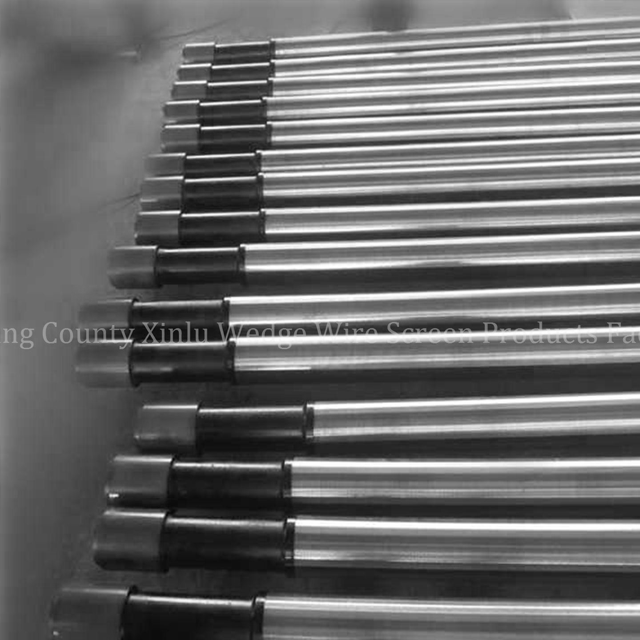
Industrial filtration and well completion are actively shifting away from treating screens as disposable commodities. Operators now evaluate these critical components as high-performance assets. Legacy hardware struggles heavily under modern extraction demands. Escalating regulatory standards demand higher environmental precision. Harsher operating environments, especially in midstream oil and gas, expose the extreme weaknesses of older equipment. Unplanned downtime brings massive financial penalties. These harsh realities drive operators to rethink their sediment control strategies entirely.
To future-proof operations, engineering and procurement teams must evaluate new options rigorously. Modern continuous-slot structures actively outperform legacy filtration methods. They deliver superior flow efficiency and unmatched structural longevity. This article explores how advanced physics improve anti-clogging performance globally. We examine critical material science trends tailored for extreme environments. You will discover exactly how to evaluate specialized vendors and procure reliable solutions to protect your valuable assets.
Key Takeaways
Advanced wedge wire screen designs are replacing traditional mesh and perforated pipes due to superior anti-clogging physics and structural integrity.
Total Cost of Ownership (TCO) in well technology is now heavily weighted toward maintenance reduction and continuous flow rates rather than initial unit costs.
Vetting a reliable wedge wire screen manufacturer requires strict attention to material traceability, custom slot tolerances, and collapse-pressure testing.
Strategic procurement of whosale Oil Well Screen inventory requires balancing standardized volume pricing with application-specific engineering.
The Business Cost of Outdated Filtration in High-Stress Environments
Outdated filtration systems quietly drain operational budgets. Sediment bypass causes severe downstream damage. When abrasive particles bypass a weak mesh, they enter the artificial lift system. Electrical Submersible Pumps (ESPs) suffer immense damage quickly. Abrasive sand particles grind down delicate pump impellers rapidly. This mechanical friction destroys vital pump seals completely. Restricted flow rates reduce your overall production yields. Blinded screens force pumps to work much harder. They consume significantly more energy during daily operations.
Extreme well depths test equipment limits relentlessly. High-pressure/high-temperature (HPHT) environments warp weak materials quickly. Corrosive fluids dissolve standard carbon steels. Traditional wire-wrap screens often fail in these harsh underground conditions. Louvered screens buckle easily under sudden pressure spikes. Operators need modern filtration solutions to survive these escalating industry drivers.
You must define strict success criteria for new equipment. We expect predictable flow dynamics across all operational phases. Engineers require verifiable structural limits before any deployment. You need exact particulate retention. Sturdy equipment captures targeted sand grains seamlessly. It achieves this without sacrificing crucial fluid throughput. Upgrading hardware ultimately protects your entire production asset.
How Modern Wedge Wire Screen Technology is Adapting
Advanced engineering transforms how we handle complex sediment. A modern Wedge Wire Screen utilizes a highly specialized V-shaped surface profile. This specific geometry creates a unique two-point particle contact. Sand grains cannot wedge themselves deeply into the gap. The V-shape profile features a wider opening on the inside. Fluid flows smoothly inward. Particles larger than the slot simply rest on the outer surface. Smaller particles pass straight through without jamming. The design actively prevents blinding during heavy fluid extraction. Operators can easily backwash the system to clear temporary blockages.
Material science drives significant lifecycle improvements. We see a massive shift toward high-grade, corrosion-resistant alloys. Standard metals degrade rapidly in highly saline environments. Duplex stainless steel (UNS S31803) offers excellent chloride resistance. Super Duplex handles even harsher chemical exposures safely. Hastelloy protects against severe sour gas conditions. These advanced alloys extend operational lifespans dramatically.
Precision manufacturing guarantees absolute filtration ratings. Older methods relied heavily on nominal particle sizing. Today, advanced robotic welding ensures ultra-tight slot tolerances. Robotic systems monitor electrical current micro-adjustments constantly. They ensure the weld penetration reaches exact depths. The welding process fuses every intersection perfectly. This absolute precision prevents unexpected sand ingress. You gain unmatched reliability in critical environments.
Evaluating Filtration Screens: Features to Outcomes
Balancing flow dynamics against structural integrity requires careful analysis. More open area equals better fluid flow. However, excessive open space weakens the physical pipe structure. Engineers must strike an optimal balance. A well-designed continuous slot structure maintains high collapse resistance. It manages this while maximizing fluid entry paths.
Comparison: Flow Dynamics vs. Structural Integrity Factors
Design Feature
Flow Benefit
Structural Impact
Engineering Solution
High Open Area
Reduces pressure drop significantly
Lowers collapse resistance
Increase support rod frequency
Thick V-Wire Profile
Maintains consistent fluid entry
Boosts tensile strength greatly
Optimize wire angle for flow
Tight Slot Tolerance
Ensures exact particle retention
Can increase blinding risk
Utilize V-shape physics
Continuous open slot designs vastly outperform perforated pipes. Perforated pipes possess heavily limited open areas. They force fluid through restrictive circular holes. This restriction creates high differential pressure. Differential pressure dictates your pumping efficiency. High pressure drops force operators to increase pump power. This escalates your energy costs significantly. Continuous slots offer maximum entry area along the entire cylinder. They reduce pressure drop efficiently.
Compliance guarantees safety and reliable performance. You must match screen specifications to strict industry standards. API (American Petroleum Institute) guidelines dictate well completion safety. API RP 19C specifically governs sand control screens. ISO 13501 defines testing procedures carefully. It mandates rigorous physical property evaluations. Verified compliance protects your site from catastrophic failures.
Sourcing Strategy: Vetting a Wedge Wire Screen Manufacturer
Finding the right partner demands strict technical vetting. A credible wedge wire screen manufacturer provides advanced engineering capabilities. They should offer computational fluid dynamics (CFD) modeling. CFD modeling simulates fluid behavior visually. Engineers identify potential erosion hotspots before manufacturing begins. They adjust the slot geometry to smooth out turbulence. The manufacturer must deliver precise burst and collapse pressure calculations. Burst calculations prevent sudden failures during high-pressure injection cycles. Collapse calculations ensure the screen withstands formation shifting forces. Catalog dimensions rarely suffice for complex completions.
Quality assurance separates premium vendors from basic suppliers. Demand transparent documentation before finalizing any purchase. You must require the following records:
Material Test Reports (MTRs): Verify alloy composition and origin precisely.
Weld Integrity Testing: Ensure joints withstand heavy deployment stress.
Dimensional Inspection Protocols: Confirm exact slot gap tolerances across the whole joint.
Supply chain resilience protects your deployment schedule. Global shipping logistics introduce unpredictable delays. Evaluate vendor lead times rigorously. Savvy procurement teams maintain a safety stock locally. Domestic sourcing offers faster delivery but might cost more. International sourcing lowers capital expenditure but brings transit risks. Always confirm post-sale technical support availability. A strong partner guides your team through installation challenges.
Implementation Realities and Rollout Risks
Upgrading legacy systems introduces specific field challenges. Dimensional constraints often complicate retrofit projects. Older casing strings feature restrictive internal diameters. You must verify the wellbore drift diameter beforehand. Modern advanced screens must fit within these tight clearances. Connection compatibility also creates common roadblocks. You must match modern threaded ends to legacy pipe joints. Careful pre-planning eliminates these deployment obstacles.
Mechanical damage during deployment remains a critical risk. A tight spot in the casing will scrape the screen. This scraping bends the delicate V-wires instantly. It ruins the micron-level slot tolerance completely. Improper handling easily destroys precision equipment. You must enforce strict deployment protocols:
Use specialized non-marking tongs to grip the screen joints securely.
Never drag the outer filtration surface across rig floors.
Apply protective lifting caps during vertical hoisting operations.
Inspect every joint visually right before running it downhole.
Lifecycle monitoring predicts maintenance cycles accurately. You should establish baseline performance tracking immediately post-installation. Modern operators install downhole pressure gauges. These sensors transmit real-time data back to the surface. Monitor differential pressure trends constantly. Sudden pressure spikes indicate potential blinding issues. Gradual pressure increases signal normal operational wear. Data-driven monitoring prevents unexpected equipment failures. It allows you to schedule maintenance proactively.
Conclusion
Advanced continuous-slot technology serves as a highly strategic investment. It protects operational uptime while safeguarding your downstream assets entirely. Relying on outdated perforated pipes exposes you to severe downtime risks. Precise material selection and stringent manufacturing tolerances ensure long-term success. Superior flow dynamics keep your fluid extraction rates consistent and predictable.
Take immediate action to secure your production infrastructure. First, audit your current equipment failure rates carefully. Identify where legacy mesh screens restrict your flow. Second, define your exact fluid parameters and operating depths. Document your specific corrosive exposures clearly. Finally, reach out to a verified manufacturer to request a technical consultation. Ask for a customized prototype tailored to your specific formation requirements. Protect your operation by demanding verifiable performance data today.
FAQ
Q: What makes a wedge wire screen superior to woven wire mesh in heavy industry?
A: A rigid welded structure handles immense pressure without tearing. The specialized non-clogging V-wire profile ensures a two-point particle contact. This specific geometry allows easy backwashing without blinding. Woven mesh easily rips under stress and traps irregular particles permanently.
Q: How do I specify the correct slot size for an oil well screen?
A: You must determine the slot size through a Particle Size Distribution (PSD) analysis. Engineers evaluate the specific formation sand samples. They typically size the slot gap to retain the 40th to 50th percentile of the sand grains. This balance ensures adequate flow while stopping destructive sediment.
Q: What documentation should I demand from a wedge wire screen manufacturer?
A: Always request comprehensive Material Test Reports (MTRs) to verify alloy quality. Demand written slot tolerance guarantees for absolute filtration accuracy. You must also require certified collapse and burst pressure ratings. These calculations must reflect your specifically ordered dimensions and chosen material.
Q: Is it cost-effective to buy wholesale Oil Well Screens for custom projects?
A: Purchasing wholesale inventory works perfectly for standardized, multi-well drilling programs. It secures excellent volume pricing. However, custom projects or highly variable geological conditions require batch-customized engineering. Balancing wholesale pricing with specialized design prevents expensive downstream failures.
We are a factory specializing in the production of high-quality wedge wire screens. We are capable of fulfilling orders of various sizes for wedge screens.