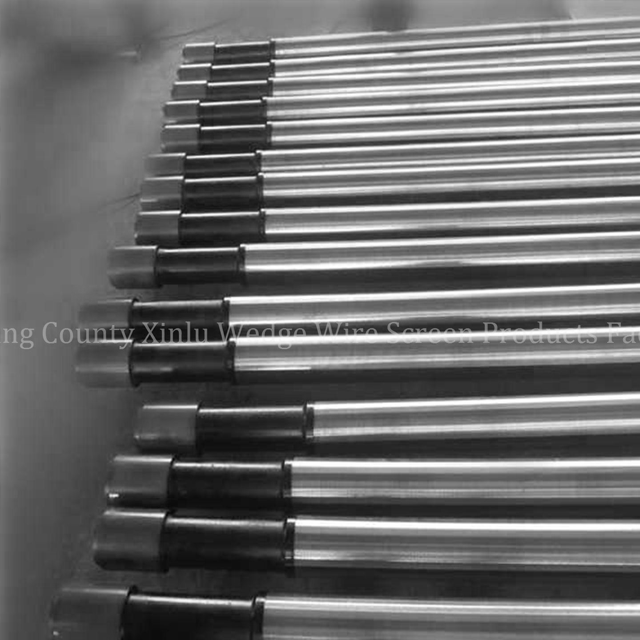
Unplanned downtime destroys production targets. Sand ingress remains a leading culprit. Equipment plugs up rapidly during heavy extraction cycles. Premature component wear forces unscheduled maintenance. You cannot afford these delays in modern oil and gas operations. A significant technological shift is underway across the industry. Traditional woven wire mesh handles basic filtration needs. However, high-pressure environments demand far more durability. Highly abrasive conditions quickly destroy standard meshes. Extraction teams now require the structural integrity of a continuous V-shaped profile. This guide establishes a rigorous technical framework. It helps you evaluate, specify, and source a reliable Wedge Wire Screen.
We cover critical downhole sand control methodologies. We also detail surface-level solids separation techniques. You will learn to map mechanical strength to specific well profiles. You will discover how to match metallurgy to chemical exposures. Ultimately, this framework ensures you implement resilient filtration architectures.
Key Takeaways
The continuous V-wire profile reduces plugging risks by allowing two-point particle contact, essential for maintaining flow rates in high-viscosity extraction.
Evaluation must prioritize burst and collapse pressure ratings, directly tying mechanical strength to specific well depth and pressure profiles.
Material selection (e.g., 316L SS vs. exotic alloys) must be mapped to operational reality, particularly in H2S (sour gas) or high-chloride environments.
Vetting a wedge wire screen manufacturer requires auditing their precise slot tolerance capabilities and proprietary welding standards, rather than relying solely on catalog specifications.
The Cost of Filtration Failure in Extraction Operations
Inadequate sand control destroys field profitability. It leads directly to severe pump erosion. Artificial lift systems break down under abrasive loads. Reduced well permeability chokes your daily output. Operators face incredibly costly workovers. You must pull the completion string out of the well. You replace damaged parts. You lose days of active production. This business problem requires a structural engineering solution. Relying on basic filtration components virtually guarantees operational failure in harsh environments.
Legacy solutions present severe limitations. Woven wire mesh suffers from inherent design flaws. It is highly susceptible to "blinding." Blinding occurs when particles wedge tightly into square mesh openings. These trapped particles block fluid flow completely. Woven meshes also fail mechanically under fluctuating pressure differentials. The over-and-under woven wires rub against each other. They wear down. They snap under stress. You lose sand control instantly when a tear occurs.
The continuous V-shaped profile offers a massive structural advantage. Engineers weld surface profiles to sturdy support rods. This structural rigidity withstands immense downhole forces. The continuous slot design maximizes the open area. You process more fluid without sacrificing burst strength. The V-shaped wire expands inward. If a particle passes the surface, it travels through freely. This prevents entrapment. It ensures continuous fluid flow. This geometry translates directly to an extended mean time between failures (MTBF). You keep wells producing longer. You reduce unexpected maintenance cycles.
Critical Oil & Gas Applications for Wedge Wire
Downhole Sand Control Screens
Downhole installations represent the most demanding operational environments. A high-quality filtration unit acts as the primary defense. It blocks formation sand from entering production tubulars. If sand breaches this barrier, it destroys surface equipment. Performance criteria revolve around precise slot sizing. Engineers measure these slot openings in tight microns. You must map these dimensions directly to formation sand particle size distribution (PSD) analyses.
Engineers deploy several design variants. Stand-alone screens work perfectly for uniform, coarse sand formations. They offer simplicity and high flow rates. Conversely, complex formations require robust alternatives. You might select wire-wrapped screens placed over perforated base pipes. The inner base pipe handles extreme structural loads. The outer wire wrap provides precise filtration. This combination resists massive collapse pressures.
Surface Solids Control (Shale Shakers & Mud Cleaning)
Drilling fluids are incredibly expensive. Operators call this fluid "mud." You must separate drill cuttings from the mud continuously. This allows you to recirculate the clean fluid back down the hole. Surface solids control relies heavily on shale shakers. These machines vibrate violently.
Performance criteria are brutally strict. The separation panels must withstand constant, high-G vibration. They process highly abrasive slurries all day long. Standard meshes tear under this cyclical fatigue. Welded V-wire designs resist structural fatigue effectively. They handle the intense vibration without snapping. They slice through thick mud efficiently. You recover more expensive drilling fluid. You dispose of dryer drill cuttings.
Refining and Processing Filtration
Filtration challenges do not end at the wellhead. Downstream refining requires intensive particle separation. You use these robust structures as catalyst bed supports. They serve as critical reactor internals. They function as high-precision molecular sieve screens.
Performance criteria shift significantly in refineries. Extreme temperature resistance becomes mandatory. Chemical resistance dictates material selection. The processing environment requires rigorous dimensional stability. If a support grid warps under heat, the catalyst bed channels unevenly. This ruins refining efficiency. Welded construction ensures the grid stays perfectly flat. It handles intense thermal cycling without deforming.
Core Evaluation Dimensions: Specifying the Right Screen
Selecting the optimal architecture requires precision. You must evaluate fluid dynamics and structural mechanics simultaneously. Do not guess these parameters.
Slot Precision and Open Area Calculation
Open area percentage drives fluid velocity. A wider open area increases fluid flow. It reduces pressure drops across the barrier. However, it also reduces structural integrity. You remove metal to create more open space. Evaluation requires rigorous mathematical modeling. You must determine the exact flow-to-strength ratio required. You match this ratio to your specific target application.
Mechanical Strength Metrics
Downhole environments crush weak equipment. You must verify three distinct mechanical metrics before deployment:
Collapse pressure: This measures resistance to external formation pressures. The earth wants to crush the pipe inward. The support rods and outer wire must resist this compressive force.
Burst pressure: This measures resistance to internal pressures. You encounter this during injection operations. You also see high burst pressures during aggressive backwashing or cleaning cycles.
Tensile strength: This represents the load-bearing capacity. You hang thousands of feet of steel in a well. The top sections must support the massive weight below. High tensile strength ensures the assembly does not pull apart during deep installations.
Metallurgy and Corrosion Resistance
Corrosion destroys mechanical integrity rapidly. You must select alloys based on fluid chemistry. Standard applications typically use 304 or 316L Stainless Steel. They provide adequate resistance for benign environments.
Corrosive or sour service changes the rules completely. You must ensure NACE MR0175 compliance when H2S is present. Hydrogen sulfide causes rapid stress corrosion cracking. You must upgrade your metallurgy. Use Duplex stainless steels, Monel 400, or Incoloy 825.
Material Alloy
Primary Application Environment
Key Resistance Characteristic
304 Stainless Steel
Standard, benign water/oil wells
Basic oxidation resistance
316L Stainless Steel
Mildly corrosive, low chloride levels
Improved pitting resistance
Duplex Stainless Steel
High chloride, moderate sour service
High strength, stress-corrosion cracking resistance
Monel 400
High HF acid exposure
Excellent resistance to hydrofluoric acid
Incoloy 825
Severe sour gas (H2S), extreme depth
Ultimate resistance to severe corrosive pitting
Implementation Realities and Rollout Risks
Even perfectly engineered equipment fails if implemented poorly. You must manage field rollout risks aggressively. We see several common failure points during deployment. You can avoid them with proper protocols.
Accurate Sizing and PSD Testing
Designing slot sizes based on incomplete particle size distribution data guarantees failure. It is the most common point of failure in sand control. Operators sometimes rush the PSD testing phase. They use averages instead of precise local data.
Over-sizing the slots leads directly to sand ingress. Abrasive particles enter the wellbore and destroy pumps. Under-sizing leads to rapid plugging. The slots block fine particles unnecessarily. Flow restriction occurs immediately. You must conduct rigorous laser diffraction or sieve analyses. You plot the D10, D50, and D90 particle sizes. You engineer the slot opening based strictly on these analytical results.
Handling and Installation Risks
Welded profiles are structurally robust. They resist massive downhole pressures. However, they are highly vulnerable on the rig floor. The precise slot openings can be deformed easily. Roughnecks often use standard rig tongs improperly. The sharp teeth of the tongs bite into the delicate surface wires. They crush the slots shut.
Best Practice: Always use non-marking, flat-jawed tongs.
Best Practice: Implement specialized lifting subs. Avoid clamping directly on the filtration surface.
Common Mistake: Dragging the units across the V-door. This grinds the profile flat and ruins the open area.
Chemical Compatibility Constraints
Well stimulation introduces harsh chemicals. Acidizing operations dissolve formation rock. They improve permeability. However, aggressive well-stimulation chemicals compromise certain base alloys. Hydrochloric (HCl) and hydrofluoric (HF) acids attack standard stainless steel aggressively.
Screen metallurgy must be evaluated against the entire lifecycle chemical exposure. Do not evaluate alloys based solely on the raw extraction fluid. Think ahead to future workovers. If you plan to acidize the well in five years, you must install an acid-resistant alloy today.
Procurement: Vetting Suppliers and Scaling Orders
Sourcing these critical components requires deep supply chain scrutiny. You cannot buy them blindly from a catalog. You need a proven manufacturing partner.
Engineering vs. Production Capabilities
Many fabricators can weld wire. Few understand petroleum engineering. A highly reliable wedge wire screen manufacturer must offer custom fluid dynamics modeling alongside basic fabrication. They need an engineering department. They should run computational fluid dynamics (CFD) simulations. They must prove how fluid behaves across their specific wire geometries. This engineering support prevents costly field failures.
Quality Assurance (QA) and Traceability
You cannot verify slot sizes visually. A 150-micron slot looks identical to a 200-micron slot to the naked eye. Yet, that 50-micron difference destroys a well. Demand documented Material Test Reports (MTRs). This proves the alloy chemistry is authentic. Demand verifiable slot tolerance auditing. The manufacturer must use optical comparators or laser measurement devices. They must provide a quality control report mapping the exact tolerances across the entire cylinder length.
Scaling Economics
Multi-well development programs consume massive inventory. When securing a whosale Wedge Wire Screen agreement, you must look beyond pure unit cost. Unit cost matters little if the rig sits idle waiting for parts. Evaluate the supplier's inventory buffering capacities. Do they hold safety stock for you? Check their lead-time guarantees. Custom slotting requires specialized CNC welding runs. Ascertain their batch-to-batch consistency. A screen manufactured in December must perform exactly like one manufactured in January.
Conclusion
Selecting the appropriate filtration architecture is an exact science. It is a strict balance of fluid dynamics, mechanical engineering, and metallurgical science. You cannot compromise on structural integrity in high-pressure extraction environments. The continuous V-profile solves the fundamental flaws of woven mesh. It prevents blinding. It maintains fluid flow. It resists collapse.
Procurement and engineering teams must act decisively. You should initiate a risk-assessment matrix today. Compare your current MTBF metrics against the advanced pressure and slot-tolerance capabilities of targeted V-wire solutions. Map your exact chemical exposures. Update your installation protocols. By applying these rigorous evaluation dimensions, you will eliminate premature equipment wear and secure maximum production uptime.
FAQ
Q: How does a Wedge Wire Screen differ from standard wire mesh in high-pressure wells?
A: Wedge wire uses welded, V-shaped profiles that prevent particle entrapment. The opening widens inward, letting particles pass freely if they breach the surface. This offers superior collapse resistance and eliminates the blinding (clogging) issues inherent to the woven structure of standard mesh.
Q: What is the typical lifespan of a downhole wedge wire screen?
A: Lifespan is highly variable. It ranges from several years to the entire life of the well. It depends entirely on abrasive flow rates, formation stability, and appropriate material selection for chemical compatibility.
Q: Do custom slot sizes significantly impact manufacturing lead times?
A: For an established manufacturer, custom slotting is standard practice. They manage it efficiently via advanced CNC welding machines. However, procuring exotic alloys for specialized chemical resistance can extend production timelines significantly.
Q: How do we verify the collapse pressure rating of a custom screen?
A: Ratings should be verified through finite element analysis (FEA). The manufacturer provides this engineering data. It must be backed by physical hydrostatic crush testing performed on exact prototype samples before mass production.
We are a factory specializing in the production of high-quality wedge wire screens. We are capable of fulfilling orders of various sizes for wedge screens.