Contents
Introduction
Understanding the Core Purpose of a Rotary Drum Screen
Main Structural Components and Their Functional Roles
Step-by-Step Process: How a Rotary Drum Screen Works in Practice
Performance Factors That Determine Screening Efficiency
Internally Fed vs Externally Fed Rotary Drum Screen Designs
Applications and Material Handling Scenarios
Advantages of Using an Automatic Rotary Drum Screen
Conclusion
FAQ
Introduction
A Rotary Drum Screen operates as a continuous mechanical separation system designed to classify, filter, and dewater materials based on particle size. Its working principle combines controlled rotation, gravity, and screened apertures to achieve reliable material separation in demanding environments. Understanding how this equipment works is essential for selecting the right configuration, optimizing throughput, and ensuring long-term operational efficiency in industrial processes.
Understanding the Core Purpose of a Rotary Drum Screen
The primary function of a Rotary Drum Screen is to separate solids from liquids or classify bulk materials by size through a rotating cylindrical drum fitted with screening media. Unlike static screens, the rotating motion enables continuous self-cleaning, reducing clogging and maintaining stable flow rates over extended operating periods.
In industrial environments, a Professional Rotary Drum Screen is used to manage high-volume material streams where consistency and reliability are critical. As material enters the drum, rotation lifts and tumbles the feed, allowing smaller particles or liquids to pass through the screen openings while larger solids move forward for discharge. This process minimizes manual intervention and supports fully Automatic Rotary Drum Screen operations.
The working intent centers on controlled separation rather than simple filtration. The drum’s rotational speed, inclination angle, and aperture size all directly influence screening accuracy. In Industrial Rotary Drum Screen systems, this allows operators to tailor performance for fine screening, coarse separation, or high-moisture material handling without compromising efficiency.
Main Structural Components and Their Functional Roles
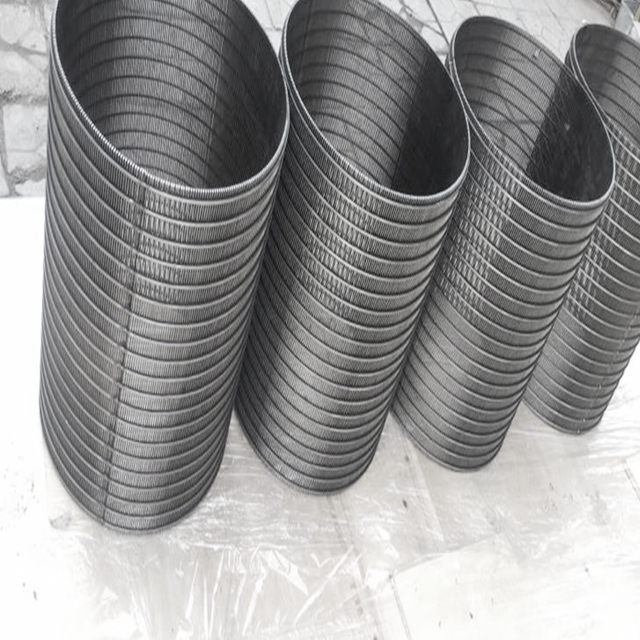
A Rotary Drum Screen relies on a precisely coordinated set of mechanical components, each contributing to stable and efficient operation. The cylindrical drum itself forms the screening surface and is manufactured with perforated plates or wedge wire panels depending on application requirements. This structure ensures durability under continuous rotation and abrasive material flow.
The drive system controls drum rotation speed, directly affecting residence time and separation accuracy. A properly calibrated drive allows a High Efficiency Rotary Drum Screen to maintain consistent throughput without over-grinding or material carryover. Support rollers and frames stabilize the drum while minimizing vibration, which is essential for long-term mechanical integrity.
Internally, lifters or baffles may be installed to improve material agitation. In Large Capacity Rotary Drum Screen setups, these features prevent material buildup and ensure even distribution across the screening surface. Feed inlets and discharge chutes are engineered to maintain smooth flow transitions, reducing wear and preventing bottlenecks during continuous operation.
Step-by-Step Process: How a Rotary Drum Screen Works in Practice
The working process of a Rotary Drum Screen follows a predictable and repeatable sequence. Material enters the drum through a controlled feed inlet, either by gravity or pumped flow. As the drum rotates, the material is lifted and cascaded across the internal surface, exposing it evenly to the screening apertures.
Fine particles or liquids pass through the screen openings due to gravity and centrifugal motion, while oversized material progresses toward the discharge end. This gradual movement is enhanced by the drum’s slight incline, allowing separation to occur without external force. In Automatic Rotary Drum Screen systems, this process operates continuously with minimal operator supervision.
The rotational motion also provides a self-cleaning effect. As material tumbles, screen openings remain clear, sustaining consistent screening efficiency. This operational principle makes a Rotary Drum Screen especially effective for sticky, fibrous, or high-moisture materials where static screens would fail.
Performance Factors That Determine Screening Efficiency
Several operational variables influence how effectively a Rotary Drum Screen works. Drum rotation speed determines how long material remains inside the screening zone. Excessive speed reduces separation accuracy, while insufficient speed can lower throughput. Proper calibration ensures a balance between efficiency and capacity.
Screen aperture size is another critical factor. Smaller openings improve separation precision but may reduce flow rate, whereas larger openings favor higher throughput at the expense of fine screening. In Industrial Rotary Drum Screen applications, selecting the correct aperture configuration is essential for meeting process objectives.
Feed consistency also plays a significant role. Uniform material distribution across the drum surface prevents localized overloading and improves screening uniformity. A well-designed High Efficiency Rotary Drum Screen integrates optimized feed geometry to maintain stable performance under variable operating conditions.
Key Performance Variables Overview
| Factor | Impact on Operation | Optimization Goal |
| Drum Speed | Controls residence time | Balance throughput & accuracy |
| Screen Aperture | Defines separation size | Match material specification |
| Feed Rate | Affects loading consistency | Avoid overloading |
| Drum Inclination | Influences material flow | Ensure smooth discharge |
Internally Fed vs Externally Fed Rotary Drum Screen Designs
Design configuration significantly affects how a Rotary Drum Screen works in real-world applications. An Internally Fed Rotary Drum Screen introduces material directly into the center of the drum, allowing screening to occur from the inside outward. This design is highly effective for liquid-solid separation, as it maximizes contact between material and screen surface.
Externally fed designs allow material to flow over the outside of the rotating drum, commonly used for pre-screening or coarse separation tasks. While simpler in structure, they may offer reduced screening precision compared to internally fed systems. Selecting the right design depends on material characteristics, moisture content, and required separation accuracy.
In high-volume environments, Large Capacity Rotary Drum Screen systems often favor internally fed designs due to their enclosed operation and superior flow control. Understanding these design differences helps operators align equipment selection with process requirements.
Applications and Material Handling Scenarios
The working principle of a Rotary Drum Screen makes it suitable for a wide range of industrial material handling scenarios. It performs reliably in processes involving wet, sticky, or abrasive materials where conventional screening methods struggle. Continuous rotation ensures uninterrupted operation even under fluctuating load conditions.
A Professional Rotary Drum Screen supports applications requiring consistent particle size classification, solid recovery, or liquid clarification. Its adaptability allows integration into automated processing lines, where stable output quality is critical. The ability to handle variable feed compositions further enhances its operational value.
In operations demanding long service life and low maintenance, a High Efficiency Rotary Drum Screen offers predictable performance with minimal downtime. Its working mechanism prioritizes durability and process stability rather than short-term throughput gains.
Advantages of Using an Automatic Rotary Drum Screen
An Automatic Rotary Drum Screen enhances operational reliability by minimizing manual adjustments and monitoring. Automated control systems regulate drum speed, feed rate, and discharge timing, ensuring consistent separation quality regardless of process fluctuations.
This automation supports continuous production environments where downtime directly impacts profitability. By maintaining stable screening conditions, a Rotary Drum Screen reduces wear, prevents blockages, and extends component lifespan. The self-cleaning action further lowers maintenance frequency.
From an operational perspective, automation improves safety and reduces labor dependency. In Industrial Rotary Drum Screen installations, these advantages translate into predictable performance, lower operating costs, and scalable processing capacity.
Conclusion
Understanding how a Rotary Drum Screen works provides valuable insight into its role as a reliable and efficient separation solution. Its rotating cylindrical design, combined with controlled material flow and self-cleaning action, enables consistent screening performance across a wide range of industrial applications.
By optimizing structural components, operational parameters, and feed configurations, a High Efficiency Rotary Drum Screen delivers precise separation while supporting continuous, automated operation. This makes it a critical asset for industries requiring dependable material classification and solid-liquid separation.
FAQ
1.What is the basic working principle of a Rotary Drum Screen?
A Rotary Drum Screen works by rotating a perforated cylindrical drum that allows smaller particles or liquids to pass through while larger materials are retained and discharged.
2.How does rotation improve screening efficiency?
Rotation lifts and tumbles material, exposing it evenly to the screen surface and preventing clogging through continuous self-cleaning action.
3.What makes an Internally Fed Rotary Drum Screen different?
An Internally Fed Rotary Drum Screen introduces material inside the drum, enabling inside-out screening that improves separation efficiency for liquid-solid applications.
4.Is a Rotary Drum Screen suitable for large processing volumes?
Yes, a Large Capacity Rotary Drum Screen is specifically designed to handle high-throughput operations with consistent performance and minimal maintenance.
5.Can a Rotary Drum Screen operate automatically?
An Automatic Rotary Drum Screen integrates control systems that regulate operation parameters, enabling continuous, unattended screening with stable output quality.


