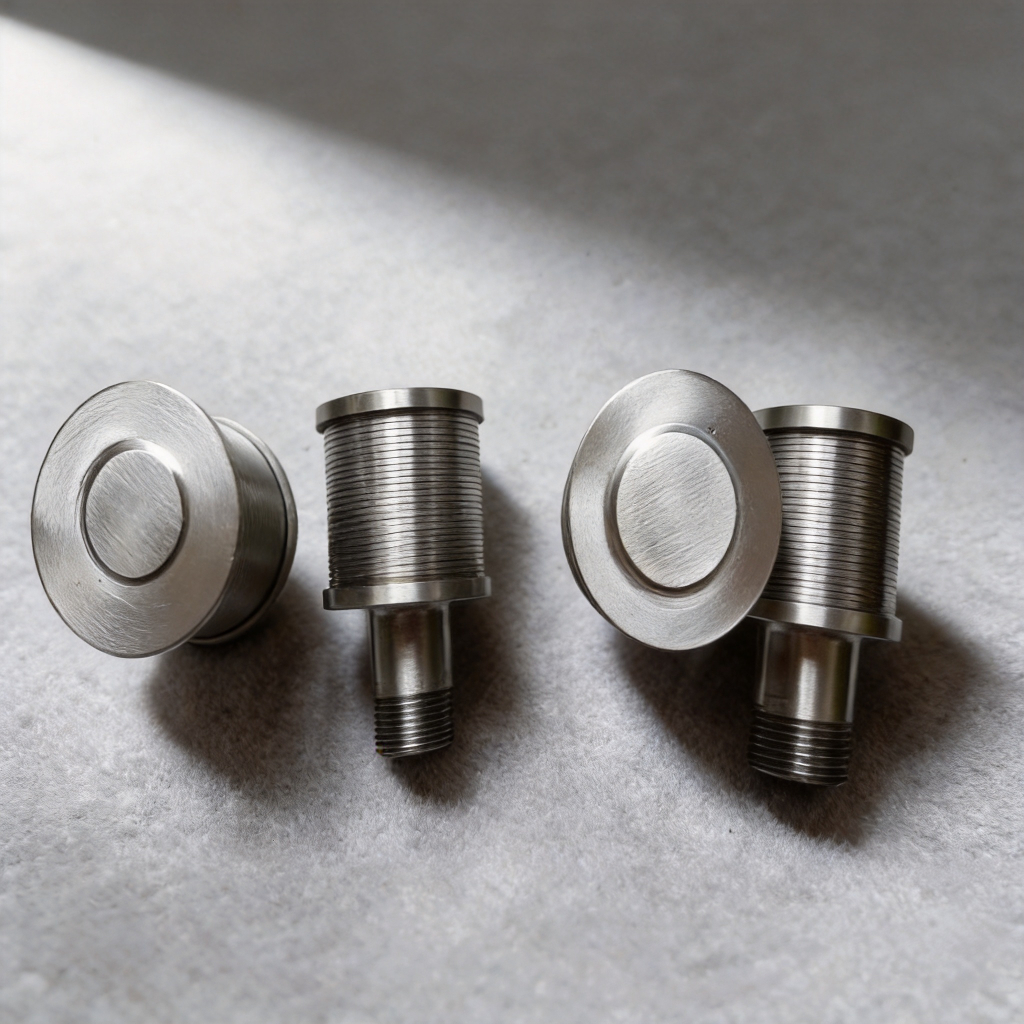
Filtration component failure leads to severe system downtime, unacceptable pressure drops, and catastrophic media loss in critical infrastructure. Plant operators and engineers constantly face the challenge of specifying filtration components that successfully balance high flow rates with absolute media retention. These components must perform reliably in harsh chemical, abrasive, or high-pressure environments without blinding or collapsing. Standard mesh and perforated screens often fail under these demanding conditions, causing process bottlenecks and expensive maintenance cycles.
The Wedge Wire Filter Nozzle serves as the industry standard for non-clogging, high-efficiency liquid/solid and gas/liquid separation. By utilizing a continuous slot design, it prevents particle entrapment and ensures continuous flow. This guide provides a comprehensive framework for evaluating specifications, materials, and manufacturing standards to help you select the exact nozzle configuration for your specific vessel requirements.
Precision dictates performance: Accurate slot size selection is the single most critical factor in preventing media escape and maintaining system equilibrium.
Material selection drives ROI: Specifying the correct grade of a stainless steel filter nozzle reduces lifecycle costs by preventing premature corrosion and structural failure.
Hydraulic dynamics matter: Proper evaluation of open area and flow rate capacity is required to minimize pressure drop (Delta P) and optimize backwashing efficiency.
Sourcing mitigates risk: Partnering with a specialized filter nozzle manufacturer ensures access to custom geometries, verified tolerances, and essential material test reports (MTRs).
The Engineering Mechanics of the Wedge Wire Filter Nozzle
Standard perforated or wire mesh nozzles suffer from rapid blinding and structural fatigue under continuous flow and backwash cycles. When particles become trapped in traditional mesh screens, they restrict flow and create a sudden increase in differential pressure. Over time, the repeated stress of backwashing weakens the mesh, leading to ruptures and the subsequent loss of expensive filter media into downstream processes. Field operators frequently report that replacing blown-out mesh screens consumes hundreds of man-hours annually.
The continuous V-shaped wire profile solves this problem through physics. Unlike depth filtration, the V-wire design utilizes surface filtration. The widening inner gap ensures that any particle passing through the surface slot will continue through the nozzle without wedging. This self-cleaning mechanism prevents clogging and maintains a consistent flow rate, even when handling fluids with high solid concentrations. We see this principle applied successfully across municipal water plants where raw intake water carries heavy silt loads.
Structural integrity is another major advantage. The manufacturing process involves welding the profile wire to internal support rods at every intersection. This creates a rigid, high-strength cylinder capable of withstanding extreme burst and collapse pressures. Compared to sintered metal or wire-mesh alternatives, this welded construction offers superior durability, particularly in high-pressure vessels subjected to aggressive backwash surges. Engineers specify these components specifically because they do not deform under sudden pressure spikes.
To understand the mechanical superiority, consider the cross-sectional area of the support rods. These rods provide the backbone of the nozzle. When a backwash pump kicks on, the sudden reversal of flow exerts tremendous outward force. A standard plastic nozzle might snap at the threaded neck, but a welded metal assembly distributes that force evenly across the entire screen surface.
Primary Applications and Use Cases
The role of the water treatment filter nozzle is critical in gravity filters, pressure vessels, and underdrain systems. These components clean up water, remove waste pollutants, and ensure facilities meet strict regulatory compliance standards, such as NSF/ANSI requirements. They distribute backwash water evenly across the filter bed, preventing dead zones and ensuring the media is thoroughly cleaned during each cycle. Proper distribution prevents mudball formation, a common issue in poorly designed gravity filters.
In mixed media vessels, the requirements for a sand filter nozzle focus on retaining fine sand or activated carbon while allowing maximum treated water throughput. The slot size must be precisely calibrated to hold back the specific D10 size of the media. This prevents the sand from migrating into the underdrain system, which would otherwise cause severe damage to downstream pumps and valves. We routinely inspect underdrains where incorrect slot sizing led to complete system failure.
Use cases for the industrial filtration nozzle extend into petrochemical refining, food and beverage production, and pharmaceutical processing. These environments often involve complex gas/liquid separation, high temperatures, and aggressive solvents. The robust construction of wedge wire allows it to maintain structural stability and filtration accuracy even when exposed to harsh industrial chemicals and thermal shocks. Refineries, for example, rely on these nozzles in hydrotreating reactors where temperatures exceed 400 degrees Celsius.
In mining and mineral processing, wedge wire nozzles handle heavy-duty dewatering and mineral recovery. They withstand highly abrasive slurries and extreme mechanical stress that would destroy standard plastic or mesh screens. Furthermore, in ion exchange and demineralization systems, wedge wire is used in resin traps and distributors. These applications demand ultra-fine slot sizes to retain expensive ion exchange resins while maintaining adequate flow distribution.
Application Area
Typical Media Retained
Common Slot Size Range
Municipal Water Treatment
Silica Sand, Anthracite
0.2mm - 0.5mm
Ion Exchange Systems
Cation/Anion Resins
0.1mm - 0.2mm
Petrochemical Refining
Catalyst Beads
0.5mm - 1.0mm
Mining Dewatering
Coarse Slurry, Minerals
1.0mm - 2.0mm
Step-by-Step Selection Guide for Custom Applications
Matching the slot size to the specific media retention requirements is the first step. Slot sizes typically range from 0.05mm to 2.0mm. The opening size dictates exactly what passes through and what is retained. Engineers base this selection on the D10 sizing of the filter media, ensuring the slot is small enough to prevent media escape but large enough to avoid unnecessary flow restriction.
Analyze the filter media specification sheet to determine the effective size and uniformity coefficient.
Calculate the maximum allowable slot width to retain 99% of the media under operating pressure.
Determine the total required open area based on the maximum anticipated flow rate.
Select the appropriate thread type and mounting hardware for the vessel's tube sheet.
Material grades and metallurgy determine the lifespan of the component. Specifying the correct grade of a stainless steel filter nozzle is essential for preventing corrosion. You must evaluate the fluid's pH, chloride concentration, and operating temperature before finalizing the material choice.
Material Grade
Primary Characteristics
Ideal Applications
304 Stainless Steel
Good general corrosion resistance, cost-effective.
Standard water treatment, low-chloride environments.
316L Stainless Steel
High pitting resistance, low carbon prevents weld decay.
Industrial wastewater, moderate chemical exposure.
Duplex / Super Duplex
Exceptional strength, high resistance to stress corrosion cracking.
Desalination, high-chloride environments.
Hastelloy / Titanium
Extreme chemical resistance, handles aggressive acids.
Petrochemical, pharmaceutical, severe corrosive fluids.
Calculating hydraulic capacity and open area is required to achieve target flow rates without exceeding acceptable pressure drop limits across the water filtration equipment. A higher open area reduces velocity through the slots, which minimizes wear and lowers energy consumption. Engineers must balance the required slot size with the necessary open area to optimize system hydraulics.
Evaluating geometry and connections involves selecting fitting styles such as NPT/BSP threading, flanged connections, long versus short tube designs, and flow distribution plates. Custom geometries are often required for retrofitting legacy systems or accommodating unique vessel architectures. Partnering with a specialized filter nozzle manufacturer ensures these custom fittings are machined to exact tolerances.
Lifecycle Value and Cost-to-Performance Trade-offs
Analyzing the upfront cost of wedge wire versus plastic or polypropylene nozzles reveals significant long-term operational savings. While plastic nozzles require lower initial capital expenditure, they degrade rapidly under thermal stress, chemical exposure, and mechanical backwashing. Wedge wire nozzles eliminate premature structural failure, resulting in zero media loss and an extended operational lifespan that far outweighs the initial investment. Plant managers who upgrade from plastic to metal consistently report fewer emergency shutdowns.
The structural rigidity and non-clogging nature of wedge wire directly improves backwashing efficiency. Because the V-shaped slots do not trap particles, the system requires a lower volume of water and less energy to flush the filter bed clean. This reduced backwash duration and frequency directly lowers operational overhead and maximizes the uptime of the filtration system. Less water used for backwashing means more treated water available for distribution.
Maintenance crews spend significantly less time replacing broken nozzles when a system utilizes welded metal components. In a typical municipal plant with hundreds of nozzles per filter bed, replacing a dozen broken plastic units requires draining the entire bed, removing the media, and performing confined space entry. Upgrading to robust metal components eliminates this recurring maintenance nightmare.
Implementation Risks and Mitigation Strategies
Media escape due to inaccurate tolerances is a major operational disaster. If slot widths are poorly manufactured, media migrates into downstream processes, causing equipment damage and product contamination. To mitigate this risk, require strict tolerance documentation and quality control guarantees from your manufacturer before installation. Always request a sample run and verify the slot dimensions with a feeler gauge.
Galvanic corrosion and chemical attack occur when incompatible metals are mixed in the vessel or when the corrosiveness of the fluid is misjudged. This leads to rapid degradation of the nozzle structure. Conduct thorough fluid analysis and demand Material Test Reports (MTRs) prior to procurement to verify the exact metallurgical composition of the nozzles. Ensure that the mounting nuts and washers match the metallurgy of the nozzle body.
Uneven flow distribution creates channeling or dead zones within the filter bed. This usually results from improper nozzle spacing or incorrect flow sizing. Utilize computational fluid dynamics (CFD) data or manufacturer-provided flow charts to dictate exact nozzle quantities and grid placement across the vessel underdrain. A poorly designed grid will cause the filter media to shift unevenly, ruining the filtration efficiency.
Conclusion
For high-stress, continuous-flow, or mission-critical filtration, wedge wire nozzles offer unmatched reliability and long-term performance. The decision matrix is straightforward: align the slot size strictly with your media specifications, choose the metallurgy based on fluid chemistry and abrasiveness, and calculate the open area based on system flow demands.
Compile accurate system flow rates, operating temperatures, and chemical profiles before contacting suppliers.
Determine the precise D10 specification of your filter media to establish the required slot size.
Request detailed technical drawings and prototype samples from shortlisted manufacturers to verify fitment.
Demand certified Material Test Reports (MTRs) to guarantee the metallurgical integrity of the delivered components.
FAQ
Q: What is the standard slot size for a sand filter nozzle?
A: The standard slot size typically ranges from 0.2mm to 0.5mm. This dimension is calculated based on the D10 size of the specific sand mesh used in the filter bed, ensuring the media is retained while allowing optimal water flow.
Q: Why choose a stainless steel filter nozzle over plastic alternatives?
A: Stainless steel provides superior temperature resistance, higher burst strength, and exceptional longevity. It resists chemical degradation and abrasive wear far better than plastic, preventing structural failure and costly media loss during aggressive backwash cycles.
Q: How do you calculate the required number of nozzles for water filtration equipment?
A: The required quantity is calculated by dividing the total maximum flow rate of the vessel by the individual flow capacity of a single nozzle. Engineers also factor in the required distribution spacing to ensure uniform flow across the entire filter bed.
Q: Can an industrial filtration nozzle be custom-threaded for retrofitting existing systems?
A: Yes. Tier-one manufacturers possess advanced machining capabilities to provide custom NPT, BSP, or proprietary threads. This allows for seamless integration into bespoke applications or direct replacement in legacy vessels without modifying the existing underdrain plate.
Q: What causes a wedge wire filter nozzle to fail?
A: Failure is rare but can occur due to extreme over-pressurization beyond design limits, incorrect material specification leading to rapid chemical corrosion, or severe abrasive wear from high-velocity mining and slurry applications.
Q: How do you clean and maintain wedge wire nozzles?
A: Maintenance typically involves standard reverse-flow backwashing procedures. For severe fouling, chemical Clean-In-Place (CIP) protocols are used, as the stainless steel withstands harsh cleaning agents. In extreme cases of scaling, ultrasonic cleaning effectively restores the original open area.
We are a factory specializing in the production of high-quality wedge wire screens. We are capable of fulfilling orders of various sizes for wedge screens.