WhatsApp: +8613315867171 Email: starlee@feiyaguoji.com

- All
- Product Name
- Product Keyword
- Product Model
- Product Summary
- Product Description
- Multi Field Search

Views: 315 Author: Site Editor Publish Time: 2026-01-27 Origin: Site


Understanding the Operational Status of a Rotary Drum Screen
Key Performance Indicators for Monitoring a Rotary Drum Screen
Mechanical Condition Tracking in an Industrial Rotary Drum Screen
Process Performance Monitoring for High Efficiency Rotary Drum Screen Operations
Automation and Sensor-Based Tracking for Automatic Rotary Drum Screen Systems
Tracking the operational status of a Rotary Drum Screen is a critical task in industrial screening, separation, and filtration processes. Stable operation directly affects throughput, screening accuracy, energy consumption, and equipment lifespan. In Industrial, Large Capacity, and High Efficiency Rotary Drum Screen applications, even minor deviations in operating conditions can lead to material loss, mechanical wear, or unplanned downtime. A structured monitoring approach allows operators to detect early warning signs, optimize performance, and maintain consistent output quality. This article provides a practical and system-level guide to tracking the operational status of a Professional Rotary Drum Screen, focusing on measurable indicators, mechanical health, automation tools, and data-driven maintenance decisions.
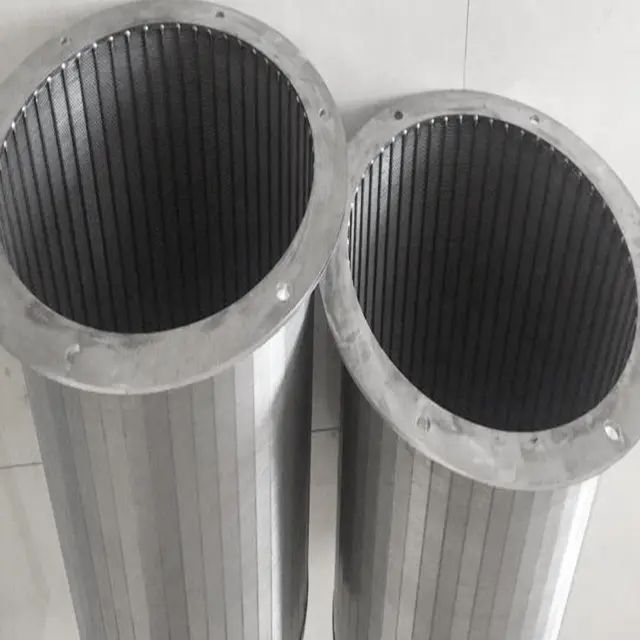
The operational status of a Rotary Drum Screen refers to the real-time and long-term condition under which the system performs its screening function. This status is not defined by a single parameter but by the interaction of mechanical motion, material flow behavior, separation efficiency, and system stability. For Internally Fed Rotary Drum Screen configurations, internal flow distribution plays an even greater role in defining normal versus abnormal operation.
Tracking operational status begins with establishing what “normal” looks like for a specific installation. Normal operation includes steady drum rotation speed, uniform material distribution across the screening surface, predictable discharge patterns, and controlled vibration levels. Deviations from these norms often indicate developing issues such as screen blinding, imbalance, bearing wear, or inconsistent feed characteristics.
Operational tracking must be continuous rather than reactive. Short-term fluctuations may be acceptable, but long-term trends reveal performance degradation. For example, a gradual reduction in screening efficiency may not trigger alarms immediately but can significantly impact overall process output. Understanding operational status therefore requires both instantaneous monitoring and historical performance comparison, especially in Large Capacity Rotary Drum Screen systems where process inertia can mask early problems.
Effective tracking of a Rotary Drum Screen relies on clearly defined Key Performance Indicators (KPIs). These KPIs translate physical behavior into measurable data that operators can evaluate objectively. Selecting the right KPIs ensures that monitoring efforts remain focused on parameters that directly influence screening performance and equipment health.
The most common KPIs include rotational speed stability, throughput rate, screening efficiency, power consumption, vibration amplitude, and material residence time. In High Efficiency Rotary Drum Screen applications, efficiency metrics are particularly important, as small losses can compound into significant operational costs. Power consumption trends also provide insight into mechanical resistance, material buildup, or misalignment.
The table below outlines core KPIs and their operational significance:
| KPI | What It Indicates | Operational Insight |
|---|---|---|
| Drum Rotation Speed | Mechanical stability | Speed deviation suggests drive or load issues |
| Throughput Rate | Process capacity | Decline may indicate blockage or feed inconsistency |
| Screening Efficiency | Separation quality | Drop points to blinding or wear |
| Power Consumption | Mechanical resistance | Increase signals friction or imbalance |
| Vibration Level | Structural integrity | Excess vibration warns of misalignment or damage |
By tracking these KPIs consistently, operators can build performance baselines and identify deviations early. This KPI-driven approach is especially valuable for Automatic Rotary Drum Screen systems, where alarms and control logic depend on quantitative thresholds rather than visual inspection alone.
Mechanical condition monitoring is a cornerstone of operational tracking for an Industrial Rotary Drum Screen. Mechanical failures often develop gradually, and without proper tracking, they can escalate into severe downtime. Key mechanical components include the drum body, support rollers, bearings, drive system, and structural frame.
Bearing temperature and vibration are among the most reliable indicators of mechanical health. Rising temperatures often signal lubrication issues, contamination, or misalignment. Vibration analysis, when tracked over time, can distinguish between imbalance, looseness, or structural resonance. For Large Capacity Rotary Drum Screen installations, mechanical loads are higher, making early detection even more critical.
Visual indicators still play a role, but they should complement data-based tracking. Uneven wear patterns on the drum surface, abnormal noise, or irregular rotation behavior often confirm trends already visible in performance data. Mechanical condition tracking should be scheduled and standardized, ensuring that inspections follow the same criteria and frequency to maintain data consistency.
By integrating mechanical tracking into daily operations, facilities reduce the risk of sudden failures and extend the service life of the Professional Rotary Drum Screen, while maintaining stable screening performance.
Process performance monitoring focuses on how effectively the Rotary Drum Screen performs its separation task under real operating conditions. Unlike mechanical tracking, which examines component health, process monitoring evaluates how material behavior interacts with the rotating drum.
Key process indicators include material distribution, moisture content impact, retention time, and discharge consistency. In Internally Fed Rotary Drum Screen systems, internal flow paths must be monitored carefully to ensure even loading across the screening surface. Uneven distribution can lead to localized wear and reduced screening accuracy.
High efficiency operation requires stable feed conditions. Sudden changes in particle size distribution or moisture content can alter screening behavior significantly. Tracking feed parameters alongside screen performance allows operators to distinguish between upstream process issues and screen-related problems. Over time, this integrated monitoring approach improves process predictability and reduces unnecessary adjustments.
Consistent process monitoring ensures that the High Efficiency Rotary Drum Screen operates within its designed parameters, maintaining separation quality while minimizing energy waste and mechanical stress.
Automation plays a central role in modern Automatic Rotary Drum Screen tracking strategies. Sensors convert physical phenomena into digital signals, enabling continuous monitoring without manual intervention. Common sensors include speed encoders, vibration sensors, temperature probes, load cells, and power meters.
Automated tracking allows for real-time alerts when parameters exceed predefined thresholds. This is especially valuable in Industrial Rotary Drum Screen environments where equipment operates continuously and manual inspection is impractical. Automated systems also enable trend analysis, helping operators predict failures before they occur.
Data integration is a key advantage of automation. When sensor data is centralized, correlations become visible—for example, linking rising power consumption with increasing vibration levels. These insights support informed decision-making and reduce reliance on reactive maintenance. Automation does not eliminate human oversight but enhances it by providing accurate, timely information for intervention.
Collecting data alone does not improve operational status tracking; interpretation is what transforms data into value. For a Rotary Drum Screen, data should be analyzed in trends rather than isolated snapshots. Trend analysis reveals gradual deterioration patterns that are invisible in daily readings.
Preventive maintenance strategies should be aligned with data findings. For example, increasing vibration trends may trigger bearing inspection before failure occurs. Declining screening efficiency trends may prompt cleaning schedules or surface replacement planning. This data-driven approach reduces unnecessary maintenance while preventing catastrophic breakdowns.
Effective interpretation requires clearly defined thresholds and response protocols. Operators should know not only when a parameter is abnormal, but what corrective action to take. Over time, this structured approach improves reliability, optimizes maintenance costs, and ensures that the Professional Rotary Drum Screen operates at peak performance.
Tracking the operational status of a Rotary Drum Screen is a multidimensional process that combines mechanical monitoring, process performance evaluation, KPI tracking, and automation support. In Industrial, Large Capacity, and High Efficiency Rotary Drum Screen applications, systematic tracking is essential for maintaining productivity and minimizing downtime. By focusing on measurable indicators, interpreting trends, and implementing preventive maintenance strategies, operators can ensure stable operation, extend equipment lifespan, and achieve consistent screening results. A disciplined, data-driven tracking approach transforms the Rotary Drum Screen from a reactive asset into a predictable and optimized component of the production system.
Q1: How often should the operational status of a Rotary Drum Screen be tracked?
Operational parameters should be monitored continuously where automation is available, with trend reviews conducted weekly or monthly for deeper analysis.
Q2: Which parameter is the earliest indicator of mechanical issues?
Vibration trends are often the earliest and most reliable indicators of developing mechanical problems in a Rotary Drum Screen.
Q3: Can automation fully replace manual inspections?
Automation enhances monitoring accuracy but does not completely replace manual inspections, which remain valuable for visual and structural assessments.
Q4: Why is data trending more important than single measurements?
Trends reveal gradual degradation patterns, allowing preventive action before performance loss or failure occurs.
Q5: Is operational tracking equally important for small and large systems?
Yes, but it is especially critical for Large Capacity Rotary Drum Screen systems due to higher loads and greater operational risk.


