Contents
Introduction
What Is a Rotary Drum Screen and Why It Matters
Core Working Principle of a Rotary Drum Screen
Key Structural Components of an Industrial Rotary Drum Screen
Types of Rotary Drum Screen and Application Scenarios
Performance Advantages of High Efficiency Rotary Drum Screen Systems
How to Select the Right Large Capacity Rotary Drum Screen
Maintenance, Operation, and Long-Term Reliability
Conclusion
FAQ
Introduction
A Rotary Drum Screen is a critical mechanical separation device widely used in industrial processing, wastewater treatment, and material classification systems. Its core purpose is to continuously separate solids from liquids or classify materials by size using a rotating cylindrical drum. As industries pursue higher automation, cleaner processing, and stable throughput, the Rotary Drum Screen has become an essential solution due to its compact structure, continuous operation capability, and adaptable design.
This article focuses exclusively on explaining what a Rotary Drum Screen is, how it works, what problems it solves, and why it is chosen over alternative screening technologies. The discussion is structured to provide both conceptual understanding and practical insights, ensuring relevance for engineers, plant operators, and technical decision-makers.
What Is a Rotary Drum Screen and Why It Matters
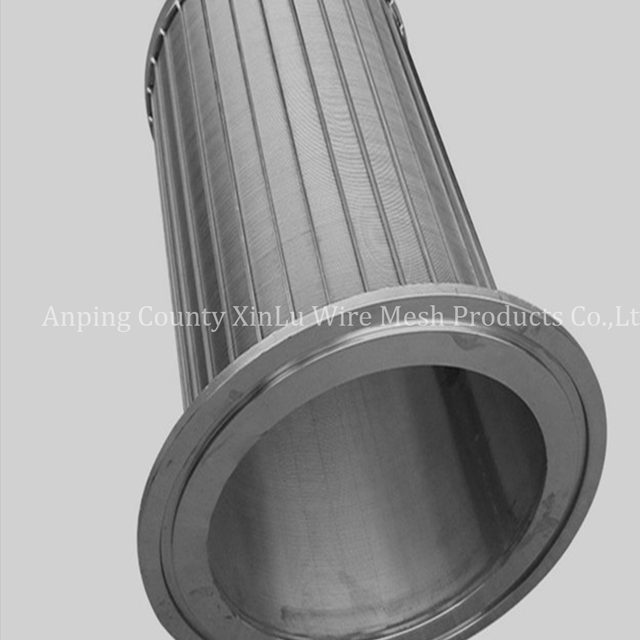
A Rotary Drum Screen is a mechanical screening device consisting of a rotating cylindrical drum with perforated or wedge-wire screen panels. Material enters the drum—either internally or externally—and as the drum rotates, smaller particles pass through the screen openings while oversized materials are retained and discharged separately.
What makes a Rotary Drum Screen particularly important is its ability to handle continuous flows with minimal operator intervention. In modern processing environments, interruptions translate directly into efficiency losses. This is why Professional Rotary Drum Screen systems are designed for uninterrupted screening under varying load conditions.
From wastewater treatment plants to industrial solid-liquid separation processes, the Industrial Rotary Drum Screen addresses several core challenges:
Reducing downstream equipment wear
Improving process consistency
Minimizing manual labor
Handling fluctuating flow rates reliably
Unlike static screens, the rotating motion prevents clogging, enabling High Efficiency Rotary Drum Screen performance even with fibrous or sticky materials.
Core Working Principle of a Rotary Drum Screen
The working principle of a Rotary Drum Screen is based on continuous rotational screening combined with gravity, hydraulic force, or mechanical conveyance. Material is introduced into the drum while it rotates at a controlled speed. The screening surface allows particles smaller than the aperture size to pass through, while larger solids move toward the discharge end.
There are two primary feeding modes:
In an Internally Fed Rotary Drum Screen, the influent enters the center of the drum and flows outward. This design ensures uniform loading across the entire screening surface and is commonly used in wastewater and sludge treatment applications.
Rotation speed, screen opening size, and drum inclination are adjusted to balance throughput and separation accuracy. When properly configured, an Automatic Rotary Drum Screen operates with minimal supervision while maintaining stable separation efficiency.
Screening Logic Overview
| Parameter | Function |
| Drum rotation | Prevents clogging and ensures material movement |
| Screen aperture | Determines separation size |
| Inclination angle | Controls retention time |
| Feed method | Affects screening efficiency |
This combination of mechanical simplicity and operational flexibility explains why the Rotary Drum Screen remains a preferred screening solution across industries.
Key Structural Components of an Industrial Rotary Drum Screen
An Industrial Rotary Drum Screen is engineered for durability, stability, and long-term operation. Its core structure includes several essential components that directly influence performance and service life.
The drum itself forms the heart of the system. It is typically fabricated from corrosion-resistant materials to withstand continuous exposure to moisture, chemicals, or abrasive solids. Screen panels are selected based on required separation size and operational environment.
Drive systems are designed for smooth rotation, ensuring consistent screening without vibration. In Large Capacity Rotary Drum Screen applications, reinforced frames and bearings are used to support higher loads and continuous duty cycles.
Key components include:
Rotating drum with precision screen panels
Drive motor and transmission system
Support rollers or trunnions
Spray or cleaning systems (optional)
Discharge chutes for separated materials
The integration of these components allows Professional Rotary Drum Screen systems to maintain high uptime while reducing maintenance frequency.
Types of Rotary Drum Screen and Application Scenarios
Different industries require different screening behaviors, which has led to multiple Rotary Drum Screen configurations. Selection depends on material characteristics, flow rate, and separation goals.
An Internally Fed Rotary Drum Screen is commonly used in liquid-dominant processes, such as wastewater treatment, where solids need to be captured efficiently without excessive splash or loss. Externally fed designs are more common in dry or semi-dry material classification.
Typical application areas include:
Industrial wastewater pretreatment
Food and agricultural processing
Pulp and fiber separation
Mineral and aggregate screening
Recycling and material recovery
In high-throughput environments, a Large Capacity Rotary Drum Screen ensures stable operation even during peak loads. Meanwhile, compact Automatic Rotary Drum Screen units are often integrated into fully automated processing lines.
Performance Advantages of High Efficiency Rotary Drum Screen Systems
The popularity of the High Efficiency Rotary Drum Screen is driven by measurable performance benefits rather than theoretical advantages. One of the most significant benefits is continuous operation without frequent blockages, even when processing fibrous or irregular materials.
Another key advantage lies in energy efficiency. Compared to vibrating screens, rotary drum designs consume less energy due to smooth rotational motion and lower dynamic stress.
Additional advantages include:
Consistent separation accuracy
Reduced wear on downstream equipment
Lower operating noise
Minimal manual intervention
For facilities aiming to optimize throughput and reduce operational costs, a Professional Rotary Drum Screen offers a balanced combination of reliability and efficiency.
How to Select the Right Large Capacity Rotary Drum Screen
Selecting the right Large Capacity Rotary Drum Screen requires careful analysis of operational parameters rather than relying on generic specifications. Material type, particle size distribution, and flow variability all play a critical role.
Decision-makers should evaluate:
An Automatic Rotary Drum Screen is ideal for facilities prioritizing minimal labor involvement, while heavy-duty Industrial Rotary Drum Screen models are better suited for harsh environments with continuous operation.
Correct selection ensures long-term stability, prevents underperformance, and maximizes return on investment.
Maintenance, Operation, and Long-Term Reliability
One of the defining strengths of a Rotary Drum Screen is its straightforward maintenance profile. Routine inspection of screen panels, bearings, and drive components ensures consistent performance.
Self-cleaning features, such as spray systems or internal brushes, further enhance the reliability of High Efficiency Rotary Drum Screen designs. With proper maintenance scheduling, service life can extend significantly even under demanding conditions.
Operational best practices include:
Monitoring rotation speed
Preventing overloading
Periodic alignment checks
Timely replacement of wear components
When maintained correctly, an Industrial Rotary Drum Screen remains a dependable part of the process flow for many years.
Conclusion
Understanding what a Rotary Drum Screen is goes beyond a simple definition. It is a versatile, efficient, and reliable screening solution designed to solve real-world separation challenges across industries. From Internally Fed Rotary Drum Screen designs to Large Capacity Rotary Drum Screen systems, its adaptability makes it a cornerstone of modern material and liquid processing.
By combining continuous operation, low energy consumption, and robust construction, the Rotary Drum Screen continues to meet the evolving demands of industrial automation and efficiency.
FAQ
1.What is a Rotary Drum Screen used for?
A Rotary Drum Screen is used to separate solids from liquids or classify materials by size in continuous industrial processes.
2.What is the difference between internally and externally fed Rotary Drum Screen systems?
An Internally Fed Rotary Drum Screen introduces material inside the drum, while external feeding applies material onto the outside surface.
3.Is a Rotary Drum Screen suitable for high-capacity applications?
Yes, a Large Capacity Rotary Drum Screen is specifically designed to handle high flow rates and continuous operation.
4.How does a High Efficiency Rotary Drum Screen reduce clogging?
Continuous rotation and optional cleaning systems prevent material buildup on the screen surface.


