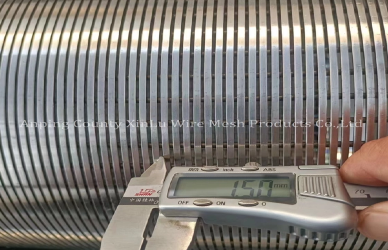
When it comes to water well screens, wire-wrapped pipes and slotted pipes are two popular options that are commonly used for filtering water in wells. Both types of screens serve the purpose of filtering out sediment, sand, and debris, allowing only clean water to flow into the wellbore. However, they differ significantly in design, efficiency, and application. This article explores the differences between wire-wrapped and slotted pipes, their features, advantages, and which is the better choice for different well conditions.
1.Wire-Wrapped Pipes: Advantages and Features
Design and Filtration Efficiency
Wire-wrapped pipes are known for their high filtration efficiency. The continuous wrap of wire around the pipe creates multiple slots that are uniformly spaced, allowing for a greater surface area to filter out debris. These pipes have precise slot openings, which help capture fine particles like silt and fine sand that may pass through other types of screens. The tightly controlled slot sizes ensure that only clean water flows into the well while keeping larger sediments out.
Moreover, wire-wrapped screens are self-cleaning to some extent. The design allows for the buildup of debris to be naturally removed, reducing the risk of clogging. This makes them an ideal choice for wells with high sediment levels.
Durability and Resistance to Clogging
Wire-wrapped pipes are highly durable and resistant to corrosion. Made primarily from stainless steel, these screens can withstand the harsh conditions of deep wells, including exposure to high pressures, temperatures, and corrosive water sources. Their robust design also makes them resistant to wear and tear from sand and other abrasive materials, allowing them to last longer than other types of screens.
Additionally, because of their design and material properties, wire-wrapped pipes are less prone to clogging. The larger surface area and even slot distribution prevent sand and debris from accumulating, allowing the screen to maintain its filtration efficiency over time.
2.Slotted Pipes: Advantages and Features
Simplicity and Cost-Effectiveness
Slotted pipes are simpler in design compared to wire-wrapped pipes, making them a more cost-effective option. These screens are created by drilling or cutting evenly spaced slots into a pipe, making them easier and cheaper to manufacture. For wells with lower sediment levels or less demanding filtration needs, slotted pipes can be a practical solution.
The simplicity of slotted pipes makes them ideal for shallow wells or applications where the cost of the installation is a significant concern. They are often used in less demanding environments where sand and sediment concentrations are low.
Flow Rate and Sediment Control
Slotted pipes are designed to allow a high flow rate, which can be crucial for certain well applications. While they may not provide the same level of fine filtration as wire-wrapped pipes, they are effective at controlling larger particles such as gravel, sand, and silt. The slot size can be customized to accommodate the sediment levels in the well, ensuring that the screen can handle the expected debris without compromising the flow rate.
However, the larger slots of slotted pipes mean that they are not as efficient at filtering out finer sediments as wire-wrapped screens. In wells with high concentrations of fine sand or silt, slotted pipes may require more frequent cleaning and maintenance to ensure consistent performance.
3.Wire-Wrapped vs. Slotted: Key Differences
Filtration and Flow Rate Comparison
When comparing wire-wrapped and slotted pipes, filtration efficiency and flow rate are two of the most important factors to consider. Wire-wrapped pipes offer superior filtration efficiency, especially for wells with fine sand, silt, or other small particles. The design of the wire-wrapped screens allows for a higher surface area for filtration, which reduces the risk of clogging and ensures that only clean water flows into the well.
On the other hand, slotted pipes allow for higher water flow but are less effective at filtering fine particles. These pipes are ideal for wells with lower sediment content, where the goal is to allow as much water to flow through as possible without significant concern for smaller particles.
Durability and Maintenance
Wire-wrapped pipes have a clear advantage when it comes to durability. Due to their corrosion-resistant stainless steel construction and robust design, they can withstand harsh well conditions for an extended period. They also require less maintenance than slotted pipes, thanks to their self-cleaning properties.
Slotted pipes are simpler but may require more frequent maintenance, especially in wells with high sediment levels. The larger slots can accumulate debris over time, which may require periodic cleaning to maintain performance. While slotted pipes are more cost-effective, they may not provide the same longevity as wire-wrapped pipes.
Comparison Table: Wire-Wrapped vs. Slotted Pipes
Feature | Wire-Wrapped Pipes | Slotted Pipes |
Filtration Efficiency | High, suitable for fine particles | Moderate, good for larger particles |
Flow Rate | Moderate (due to smaller slots) | High, allows more water flow |
Durability | High, resistant to wear and corrosion | Moderate, may wear faster |
Maintenance | Low, self-cleaning, less clogging | Higher, may require frequent cleaning |
Cost | Higher due to complex design | Lower, simpler design |
Best for | High-sediment, fine filtration needs | Low-sediment, cost-effective wells |
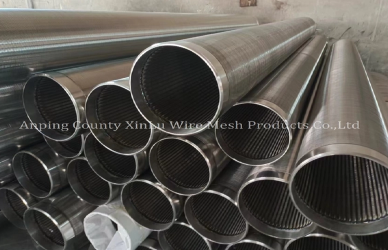
4.Which Screen Is Best for Your Well?
Choosing Based on Well Depth and Water Quality
The best choice between wire-wrapped and slotted pipes depends on the well's depth and water quality. For deep wells with high pressures and high sediment concentrations, wire-wrapped pipes are often the best choice due to their superior filtration and durability. They can handle high-pressure conditions and effectively filter fine sand and silt, ensuring the longevity of the well.
For shallow wells or wells with relatively clean water, slotted pipes may suffice. They provide a cost-effective solution while allowing higher water flow rates, making them ideal for wells that don't require as stringent filtration.
Considerations for Sand and Debris Conditions
In wells where sand and debris are prevalent, wire-wrapped pipes are the ideal choice due to their ability to filter out fine particles. Slotted pipes, while effective for larger particles, may struggle to handle finer sediments and could result in clogging. If a well consistently experiences high sediment concentrations, investing in wire-wrapped pipes is a more efficient solution.
5.Cost-Effectiveness of Wire-Wrapped and Slotted Pipes
Initial Investment vs. Long-Term Maintenance
While wire-wrapped pipes have a higher initial cost due to their design and material, they offer long-term savings by reducing maintenance needs and extending the well's lifespan. The reduced frequency of maintenance and the added durability make them a more cost-effective choice in the long run.
Slotted pipes are more affordable upfront but may require more frequent cleaning and repairs due to their propensity to clog. This means that while they offer short-term savings, the ongoing maintenance costs could add up over time.
Evaluating Overall Value
When evaluating overall value, it's important to consider both the initial investment and the long-term benefits. Wire-wrapped pipes provide greater value for wells that experience high sediment levels or where the well’s longevity is a priority. Slotted pipes are a good option for those with budget constraints or wells where sediment concentrations are minimal.
FAQ
Can wire-wrapped pipes be used in all types of wells?
Yes, wire-wrapped pipes are versatile and can be used in a wide range of well types and depths. They are especially suitable for conditions that require high durability, such as deep wells or wells with high sediment levels. Their design offers superior filtration efficiency, making them ideal for challenging environments where fine sand and silt must be filtered out effectively.
Do slotted pipes require more maintenance than wire-wrapped pipes?
Slotted pipes generally require less maintenance at the outset due to their simpler design, but they tend to clog more easily in wells with higher sediment concentrations. This can result in more frequent cleaning and maintenance compared to wire-wrapped pipes. Slotted pipes are more suitable for wells with lower sediment levels, but in sediment-heavy environments, the risk of clogging increases, requiring regular cleaning and potentially leading to higher long-term maintenance costs.
Are wire-wrapped pipes more expensive than slotted pipes?
Yes, wire-wrapped pipes are typically more expensive due to their intricate design and high-quality materials like stainless steel, which offer enhanced durability and filtration capabilities. While the initial cost of wire-wrapped pipes is higher, they often result in fewer maintenance costs over time, as they are more resistant to clogging and wear. This makes them a better long-term investment, especially for wells in harsh or high-sediment environments.
Which option offers better protection against sand infiltration?
Wire-wrapped pipes generally provide superior protection against sand and fine debris due to their precise design and uniform slot distribution. The continuous wire-wrapped structure creates smaller, evenly spaced slots that are highly effective at filtering out sand, silt, and other particles, ensuring that only clean water enters the well. This makes wire-wrapped pipes a better option for long-term filtration, particularly in wells with high levels of fine sediment.
Conclusion
Both wire-wrapped and slotted pipes offer distinct advantages depending on the needs of the well. Wire-wrapped pipes excel in filtration efficiency, durability, and longevity, making them ideal for wells with high sediment levels or challenging environmental conditions. Their robust design and fine filtration capabilities ensure effective sand control and longer-lasting well performance. On the other hand, slotted pipes are more cost-effective and provide higher flow rates, but they may require more frequent maintenance and are less effective at filtering out fine particles. Ultimately, the right choice depends on your specific well conditions. If your well has high sediment concentrations or requires a screen capable of withstanding harsh conditions, wire-wrapped pipes are the better option. However, for shallower wells or when cost is a significant factor, slotted pipes can offer an adequate solution.


