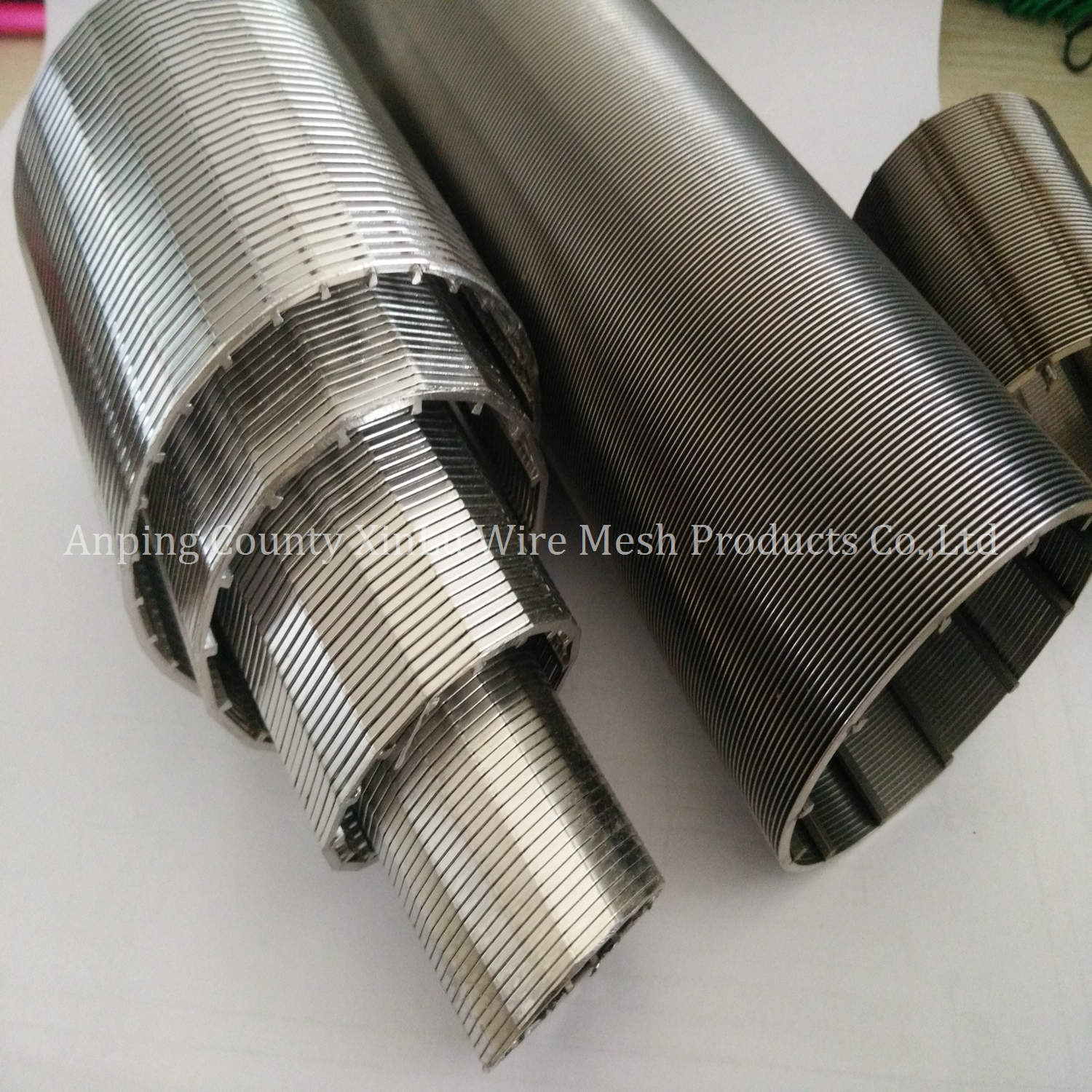
Industrial filtration failure carries incredibly high stakes. Substandard screens quickly lead to catastrophic pressure drops, premature clogging, and severe unplanned downtime. When a critical process halts due to media blinding or structural collapse, the operational impact is immediate and severe. Distinguishing between a true engineering-focused Wedge Wire Screen Manufacturer and a standard commodity reseller is often difficult. Surface-level specifications frequently mask poor weld integrity, inconsistent wire uniformity, and fluctuating slot tolerances. Engineers cannot rely on basic data sheets alone.
You need a reliable technical evaluation framework to vet potential manufacturing partners. This framework must analyze fabrication capabilities, material expertise, workforce craftsmanship, and quality assurance protocols. Selecting the right partner ensures your filtration systems operate at peak efficiency under demanding conditions. This guide provides the exact criteria required to evaluate suppliers and secure high-performance filtration components for your specific industrial applications.
Precision is Non-Negotiable: Continuous slot uniformity and strict physical consistency within the profile wire dictate the efficiency of any industrial filtration screen; deviations lead to blinding and reduced throughput.
Material Selection Drives Longevity: The right partner will guide you past standard 304/316L stainless steel to specialized alloys when operating environments demand high corrosion or temperature resistance.
Customization Capabilities Matter: Off-the-shelf solutions rarely optimize complex flow dynamics. Prioritize manufacturers capable of engineering custom profiles, support rods, and specific connection types.
Defining Your Industrial Filtration Screen Requirements
Application-Specific Success Criteria
Before contacting any supplier, you must define the precise success criteria for your application. Begin by calculating the required open area, target flow rates, and acceptable pressure drops. These metrics dictate the fundamental geometry of your screen. Specific particle retention requirements directly influence slot sizing and profile wire geometry. A highly viscous fluid requires a different wire profile than a high-velocity gas stream. The V-shaped profile of wedge wire prevents particle entrapment by expanding inward, allowing undersized particles to pass through without blinding the surface. Contrast this with standard wire mesh or perforated plates, which trap particles within their uniform openings. The engineering investment in wedge wire is justified by its self-cleaning nature and high-flow capacity in non-clogging applications.
To accurately determine your needs, you must evaluate the fluid dynamics of your specific system. Consider the Reynolds number of your flow to understand whether you are dealing with laminar or turbulent conditions. Turbulent flows often require heavier profile wires to withstand the constant kinetic energy bombardment. Furthermore, the specific gravity and viscosity of the fluid will dictate the necessary open area percentage to maintain the desired flow rate without exceeding the maximum allowable pressure drop. A properly engineered screen balances particle retention with hydraulic efficiency, ensuring that the pump systems are not overworked and that the process maintains a steady state.
Operating Environment and Material Demands
The operating environment dictates material selection and structural design. Chemical exposure, extreme temperatures, and abrasive media rapidly degrade standard materials. You must document the pH levels, chloride concentrations, and maximum operating temperatures of your process fluid. Establish the baseline requirements for structural integrity under varying differential pressures. High-pressure environments demand thicker support rods and closer rod spacing to prevent collapse. Abrasive slurries require hardened alloys to resist wear. Failing to account for these environmental stressors leads to premature screen failure and process contamination.
For instance, in petrochemical refining applications, screens are frequently exposed to highly corrosive sour gas or aggressive hydrocarbon mixtures at elevated temperatures. In these scenarios, standard austenitic stainless steels will rapidly succumb to chloride stress corrosion cracking. You must specify materials that offer high pitting resistance equivalent numbers (PREN). Similarly, in mineral processing, the abrasive nature of the slurry requires profile wires with high surface hardness to prevent rapid wear and subsequent widening of the slot openings, which would compromise particle retention.
Core Capabilities to Look for in a Wedge Wire Screen Manufacturer
Precision Engineering and Wire Uniformity
Evaluate a manufacturer's tooling and machinery to ensure they can maintain continuous slot consistency. Advanced CNC welding machines and automated indexing systems are mandatory for tight tolerances. Emphasize the critical need for physical consistency and uniformity within the profile wire itself prior to welding. Variations in wire width or angle directly compromise the final slot tolerance. If the wire varies by even a fraction of a millimeter, the resulting slot will trap particles and cause localized blinding. Ask prospective partners how they monitor and control wire dimensions during the drawing and rolling processes.
The drawing and rolling of the profile wire is a metallurgical art form. The dies used to shape the wire must be meticulously maintained. As dies wear down over time, the wire profile can subtly change, leading to inconsistencies in the final screen. A top-tier manufacturer will have strict quality control protocols for die inspection and replacement. They will also utilize laser micrometers to continuously monitor the wire dimensions as it is being produced, ensuring that only perfectly uniform wire is fed into the welding machines.
Advanced Material Expertise
Sourcing a high-grade stainless steel wedge wire screen is standard, but verifiable material grades are essential. Request documentation proving the origin and composition of their raw materials. Furthermore, assess the manufacturer's ability to work with exotic alloys. Aggressive environments often require duplex stainless steels, Hastelloy, Titanium, or Monel. Welding these advanced alloys requires specific expertise and controlled environments to prevent contamination and maintain corrosion resistance. A capable manufacturer will have documented welding procedures for these specialized materials.
Working with exotic alloys is not simply a matter of swapping out the wire spools. Materials like Titanium require inert gas shielding during welding to prevent atmospheric contamination and embrittlement. Duplex stainless steels require precise control of heat input and cooling rates to maintain the correct balance of austenite and ferrite phases, which is critical for their corrosion resistance and mechanical strength. You must verify that the manufacturer has the metallurgical knowledge and the specialized equipment necessary to process these advanced materials correctly.
Custom Wedge Wire Screen Fabrication
Evaluate the capacity for bespoke engineering. Industrial applications rarely fit standard dimensions. You need a partner capable of producing a custom wedge wire screen with specific diameters, lengths, and non-standard slot sizes. Discuss the importance of customized end fittings. Specifying exact connection sizes and types ensures seamless integration into your existing infrastructure. Whether you require NPT threads, ANSI flanges, or sanitary tri-clamps, the manufacturer must demonstrate the ability to machine and weld these fittings with absolute precision.
The integration of custom fittings is often where lesser manufacturers fail. The welding of a heavy ANSI flange to a relatively thin-walled screen cylinder requires exceptional skill to prevent distortion and maintain concentricity. If the flange is welded out of square, the screen will not seal properly in the housing, leading to fluid bypass and process contamination. Demand to see examples of their custom fabrication work and inquire about their dimensional inspection procedures for finished assemblies.
Evaluating Production Quality and Manufacturing Standards
Welding Integrity and Structural Strength
The intersection weld between the profile wire and support rod is the most critical structural element of the screen. This single point of contact must withstand immense shear forces and differential pressures. Assess the weld penetration depth and the methods used to prevent heat-affected zone (HAZ) vulnerabilities. Excessive heat input during welding alters the metallurgical properties of the stainless steel, reducing corrosion resistance and causing embrittlement. A skilled manufacturer utilizes precise resistance welding techniques to ensure deep penetration without compromising the surrounding material.
Resistance welding is the preferred method for wedge wire screens because it allows for highly localized heat input and rapid cooling. This minimizes the size of the HAZ and preserves the mechanical properties of the wire. However, the welding parameters—current, voltage, and pressure—must be perfectly calibrated for the specific wire size and material grade. Ask the manufacturer about their weld qualification procedures and how they verify the strength of the intersection welds on a production basis.
Workforce Expertise and Craftsmanship
Assess the qualifications of the engineering and fabrication teams. Look for advanced equipment operation skills and certified welders. Certifications such as ASME Section IX demonstrate a commitment to rigorous welding standards. Experienced metallurgists on staff are invaluable for understanding complex flow dynamics and recommending appropriate alloys. Craftsmanship matters in custom fabrication. The ability to roll, form, and weld complex geometries without distorting the slot openings requires years of specialized experience.
The human element in manufacturing cannot be overstated. Even with automated CNC equipment, skilled operators are required to set up the machines, monitor the process, and make micro-adjustments to maintain tolerances. In custom fabrication, the fit-up and tack welding of complex assemblies rely entirely on the spatial awareness and manual dexterity of the fabricator. When auditing a potential supplier, pay attention to the tenure and training of their shop floor personnel.
Surface Finish and Treatment
Surface finish directly impacts performance and longevity. Discuss the role of electropolishing, passivation, and mechanical polishing. These treatments reduce friction, prevent bacterial growth, and mitigate localized corrosion. Electropolishing removes surface contaminants and creates a chromium-rich passive layer. A uniform surface finish across the entire screen prevents micro-abrasions that lead to clogging. In sanitary applications, a specific Ra (Roughness Average) value is often mandated, and the manufacturer must have the capability to achieve and verify this finish.
Mechanical polishing can achieve a smooth surface, but it often folds material over microscopic pits, trapping contaminants. Electropolishing, on the other hand, dissolves the microscopic peaks on the metal surface, resulting in a truly clean and passive finish. This is absolutely critical in food, beverage, and pharmaceutical applications where any surface imperfection can harbor bacteria and compromise product safety. Ensure the manufacturer has in-house electropolishing capabilities or partners with certified finishing facilities.
Quality Assurance and Testing Protocols
Mandatory documentation is your primary defense against substandard products. Request Material Test Reports (MTRs), ISO 9001 certifications, and comprehensive dimensional inspection reports. Factory acceptance testing (FAT) is crucial before shipment. This includes pressure testing, slot tolerance verification, and visual inspections.
Test Type
Purpose
Acceptance Criteria
Positive Material Identification (PMI)
Verifies exact alloy composition.
Matches specified MTRs exactly.
Slot Tolerance Verification
Ensures continuous opening accuracy.
Within specified +/- micron range.
Collapse/Burst Pressure Testing
Validates structural integrity under load.
Exceeds maximum operational differential pressure.
Surface Roughness (Ra) Measurement
Confirms smoothness for sanitary/flow needs.
Meets specified micro-inch/micron target.
Dye Penetrant Inspection (DPI)
Detects surface-breaking defects in welds.
Zero visible indications of cracking or porosity.
Types of Wedge Wire Products and Supplier Specializations
Flat Panels, Cylinders, and Baskets
Different geometries require different manufacturing approaches. Flat vibrating screens endure severe mechanical stress and require heavy-duty support frames and robust welding. Curved or cylindrical centrifuge baskets operate under high rotational speeds, demanding perfect concentricity and dynamic balancing. An industrial filtration screen designed for a static vessel has vastly different structural requirements than one subjected to continuous vibration or centrifugal force. Ensure the manufacturer has specific experience with your required geometry.
Centrifuge baskets, for example, must be dynamically balanced to prevent catastrophic vibration at high rotational speeds. The manufacturing process must ensure that the mass is distributed perfectly evenly around the circumference of the basket. This requires precision rolling, meticulous weld placement, and specialized balancing equipment. If a manufacturer primarily produces static flat panels, they likely lack the expertise and equipment to produce high-speed rotating components safely.
Wedge Wire Screen Tube Production
Evaluate capabilities in producing a wedge wire screen tube. These tubes operate in either radial internal (flow in-to-out) or radial external (flow out-to-in) configurations. The orientation of the profile wire must match the flow direction to utilize the V-shaped slot effectively. Flow out-to-in configurations typically have the flat surface of the wire facing outward, while flow in-to-out configurations have the flat surface facing inward. The manufacturer must accurately roll and weld the wire in the correct orientation without distorting the slot.
The manufacturing process for flow in-to-out tubes is inherently more complex. The profile wire must be inverted and welded to the inside of the support rods. This requires specialized internal welding mandrels and precise control to ensure the slot remains uniform. When evaluating a supplier for internal flow applications, ask for specific details about their internal welding capabilities and request samples to verify the slot consistency on the inner diameter.
Water Well Screen Manufacturer Capabilities vs. Industrial Processing
Contrast the high-volume production of water well screens with the high-precision demands of industrial processing. A standard water well screen manufacturer often focuses on standardized dimensions and basic 304 stainless steel. Petrochemical, food and beverage, or pharmaceutical filtration requires highly customized engineering, exotic alloys, and exceptionally tight tolerances. While the basic technology is similar, the required precision and quality control protocols are vastly different. Verify that the supplier specializes in industrial applications, not just agricultural or municipal water extraction.
Water well screens are typically installed once and left in the ground for decades, dealing with relatively benign groundwater. Industrial screens are subjected to aggressive chemicals, high temperatures, and frequent cleaning cycles. The structural integrity and material quality required for industrial applications are an order of magnitude higher. Do not assume that a company capable of producing miles of standard well screen can successfully engineer a custom filtration component for a critical chemical process.
Vendor Trade-Offs and Supply Chain Considerations
Direct Manufacturer vs. Wedge Wire Screen Supplier
Analyze the trade-offs of working directly with a fabricator versus a distributor. A direct wedge wire screen supplier who manufactures in-house provides superior technical support, custom engineering capabilities, and direct accountability for quality. Distributors might offer faster lead times for standard stock items but often lack the engineering depth required for complex industrial problems. Working directly with the factory ensures your specifications are understood and implemented without miscommunication through a middleman.
When you work directly with the manufacturer, you have a direct line of communication to the engineers designing your screen. You can discuss flow dynamics, material selection, and structural calculations in detail. Distributors often act as a barrier, passing messages back and forth and increasing the risk of critical technical details being lost in translation. For custom industrial applications, direct factory engagement is essential for success.
Upfront Tooling vs. Long-Term Durability
Investing in thicker support rods, premium alloys, and advanced surface treatments yields significant long-term durability. Thicker profiles resist deformation under pressure spikes. Premium alloys prevent corrosion-induced failures. While standard materials might seem sufficient initially, the operational reality of industrial filtration often exposes weaknesses rapidly. Focus on the structural ROI of robust engineering to prevent frequent screen replacements and the associated maintenance downtime.
Consider the cost of a single unplanned shutdown in a major processing facility. The lost production revenue dwarfs the initial purchase price of the filtration screen. Specifying a heavier profile wire or a higher-grade alloy might increase the upfront cost by a fraction, but it provides an insurance policy against catastrophic failure. Always engineer for the worst-case operational scenario, not just the steady-state conditions.
Supply Chain and Lead Times
Evaluate the risks associated with global sourcing versus domestic manufacturing. Global sourcing may introduce shipping delays, communication barriers, and inconsistent quality oversight. Domestic or localized manufacturing often provides tighter QA oversight, easier factory audits, and faster resolution of engineering issues. Consider the critical nature of your project timeline and the potential impact of supply chain disruptions when selecting a manufacturing partner.
If you choose to source globally, you must implement rigorous third-party inspection protocols. You cannot rely solely on the manufacturer's internal QA documentation. Hire independent inspectors to verify material grades, witness pressure tests, and confirm dimensional tolerances before the screens are crated for international shipment. The cost of discovering a manufacturing defect after the product has crossed the ocean is simply too high.
Implementation Risks and Mitigation Strategies
Risk: Clogging and Blinding
Clogging and blinding halt production and require immediate maintenance. Mitigation requires verifying the manufacturer's capability to produce true V-shaped slots with sharp, well-defined edges. Ensure strict wire uniformity throughout the entire screen length. Mandate surface treatments, such as electropolishing, that reduce friction and prevent particles from adhering to the wire surface.
Risk: Structural Failure Under Pressure
Structural failure under high differential pressure leads to catastrophic system damage. Mitigation involves requiring detailed engineering calculations for collapse and burst strength prior to fabrication. Ensure the support rod spacing is optimized for your specific differential pressure. Do not rely on generic pressure ratings; demand calculations based on your exact screen dimensions and operating conditions.
Risk: Connection and Fitment Issues
Improper fitment causes leaks, bypasses, and installation delays. Mitigation requires mandating strict dimensional tolerances for all connection types. Request 3D CAD models or prototype approvals before full-scale production begins. Verify that the manufacturer uses precision machining for all flanges, threads, and custom fittings to ensure seamless integration with your existing piping and vessels.
Conclusion
Selecting a wedge wire screen manufacturer is a critical engineering decision, not merely a routine procurement exercise. Operational success relies entirely on vetting precision, material quality, workforce craftsmanship, and weld integrity. A rigorous evaluation process separates capable engineering partners from standard commodity suppliers. Narrow your shortlist to manufacturers who provide transparent engineering data, verifiable material certifications, and a proven track record in your specific industrial application.
Request technical consultations with the engineering teams of your shortlisted manufacturers to discuss your specific flow dynamics.
Submit your preliminary CAD drawings or process specifications for their review and ask for detailed fabrication proposals.
Demand sample tolerance reports and anonymized Material Test Reports (MTRs) from past projects to verify their quality assurance claims.
Schedule a factory audit or virtual tour to inspect their CNC welding equipment and quality control laboratories directly.
FAQ
Q: What is the standard slot tolerance for a high-quality wedge wire screen?
A: Standard industry tolerances typically range from +/- 0.05mm to +/- 0.02mm. The exact tolerance depends on the application requirements and the manufacturer's specific tooling capabilities. High-precision applications demand the tighter end of this spectrum.
Q: How do I verify the material grade provided by a wedge wire screen supplier?
A: You must request certified Material Test Reports (MTRs) from the mill that produced the raw steel. Additionally, require Positive Material Identification (PMI) testing on the finished screen to guarantee the alloy matches the specification.
Q: What is the difference between flow-in-to-out and flow-out-to-in wedge wire screen tubes?
A: This refers to the orientation of the V-wire. Flow-out-to-in has the flat wire surface on the exterior, filtering fluid as it enters the tube. Flow-in-to-out places the flat surface inside, filtering fluid as it exits. This orientation is critical for effective backwashing.
Q: Can a water well screen manufacturer produce screens for chemical processing?
A: While the basic wedge wire technology is similar, chemical processing requires significantly tighter tolerances, specialized exotic alloys, and complex custom engineering. Standard water well screen makers often lack the precision equipment and metallurgical expertise required for these demanding industrial applications.
Q: Why is electropolishing recommended for a stainless steel wedge wire screen?
A: Electropolishing removes microscopic surface contaminants and creates a highly uniform, smooth finish. This process significantly improves corrosion resistance, reduces friction, and prevents particles and biological matter from adhering to the screen, thereby mitigating clogging and biofouling.
Q: How does support rod spacing affect an industrial filtration screen?
A: Support rod spacing directly dictates the screen's structural strength. Closer rod spacing increases the burst and collapse pressure ratings, allowing the screen to withstand higher differential pressures. However, denser rod spacing slightly reduces the total open area, requiring a precise engineering balance.
We are a factory specializing in the production of high-quality wedge wire screens. We are capable of fulfilling orders of various sizes for wedge screens.